
What The Gaze Takes: The Window and The Sunken Place
Cinema has always been a question of position. Every choice the camera makes, from who the camera follows to who it looks away from, is never a mere technical decision. Everything is political. Earlier this semester, B&A introduced the concept of a line that divides who narrates from who gets narrated. We found this line running straight through two films that you wouldn’t expect to have much in common right away: Alfred Hitchcock’s Rear Window (1954) and Jordan Peele’s Get Out (2017). A mid-century thriller and a modern-day horror film. But underneath that, both are about what the gaze takes from the people caught inside it.
The politics of the gaze
ASHLEY: Alfred Hitchcock's Rear Window is a genuinely fun film, thrilling even. Hitchcock does this wonderful job of keeping you on the edge without you even realising it. The film introduces us to photographer L.B. Jefferies, who sits in his apartment with a broken leg, confined to his wheelchair, and so he watches his neighbours from his window to make time go by less painfully. Somewhere in the midst of watching it, you realise that you, too, have enjoyed being a voyeur. That you’ve been watching these people on your screen the same way Jefferies has, with that same curiosity. But Jefferies watches because he can't move. What excuse do the rest of us have?
This semester, B&A is investigating the line as a border. Not necessarily borders on a map, but the kind of separation that decides who speaks and who is spoken about. We have been asking what it means to be a minority not simply as a matter of identity, but as a matter of position. And what Hitchcock imparted to me as an audience member, possibly even more than he intended, is that position is always produced through a gaze. Someone always decides where to look while someone else lives inside that decision.
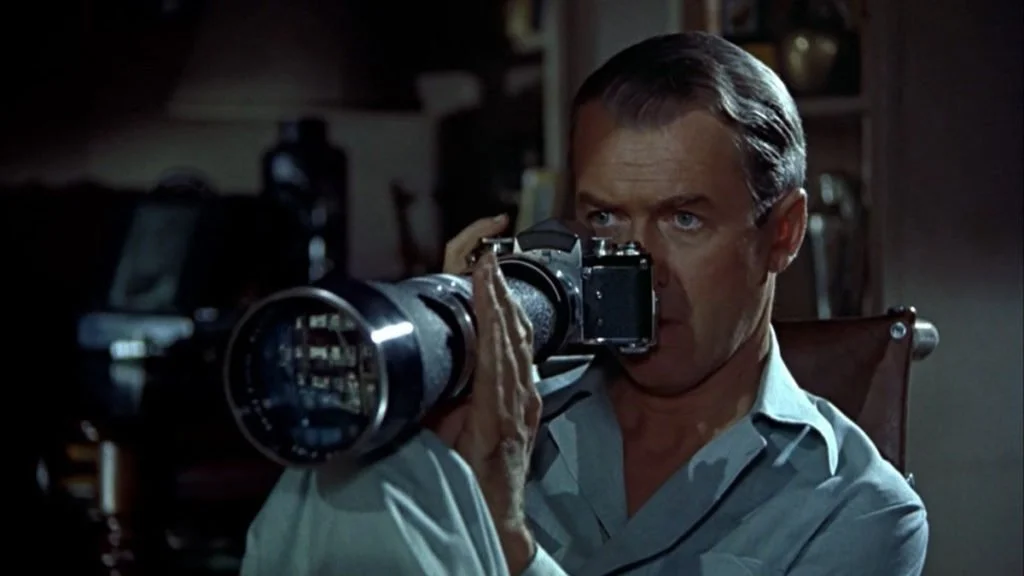
James Stewart as L.B. Jefferies in Rear Window (1954)
LILI: “It’s such a privilege to be able to experience someone else’s culture”.
There is a clear divide between experiencing and overwriting someone else’s culture, and this divide is characterised by the border we are discussing this semester. The border we build out of fences and barbed wire to keep the ‘experience’ pleasant and rejuvenating. The border is exactly what prevents this ‘experience’ from truly acknowledging others for what they are and who they represent. The border puts one party on the high horse and lets them write everyone’s experience for themselves.
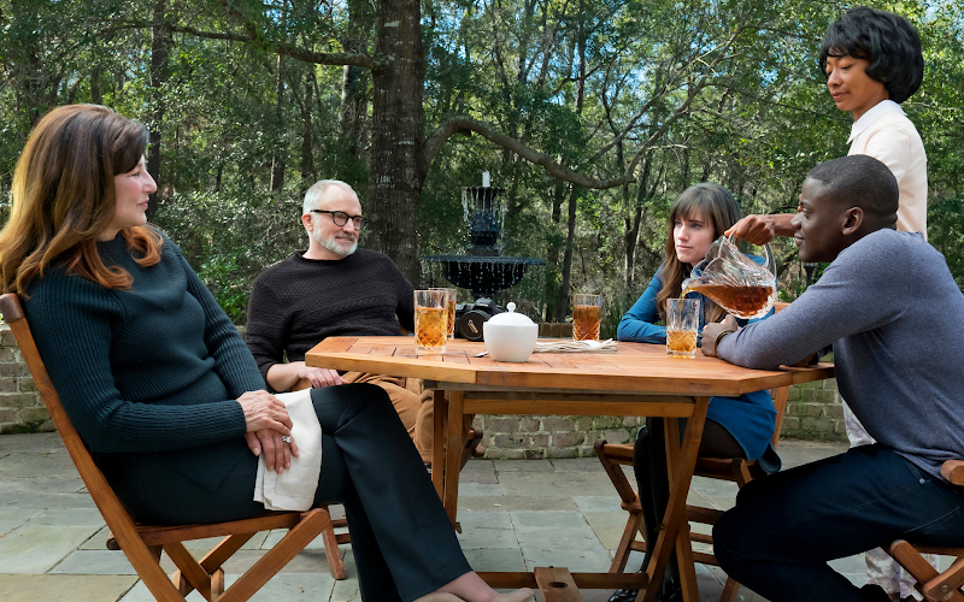
Get Out, directed by Jordan Peele, follows Chris, an African-American man who goes to visit his Caucasian girlfriend’s parents for a weekend. On their way to the family estate, the girlfriend hits a deer with her car, but is reluctant to check on it. Instead, Chris finds it across the road, dead. The deer’s death foreshadows how the family will treat Chris during the weekend and it also draws attention to the way minorities are being treated in a way similar to animals: being used and then hung as trophies for experience, just like the heads of deer in hunting homes. The experience of getting to know someone else’s culture is a privilege when it decorates your home, when it cannot speak for itself because it is dead, stuffed with wool and adorned with beautiful glass eyes.
ASHLEY: The protagonist, Jefferies, never learns the real names of his neighbours. He invents them himself – Miss Lonelyhearts, Miss Torso, the Songwriter, the Newlyweds, Miss Hearing Aid, the travelling salesman and his wife – and in doing so, he does exactly what those in power have always done: naming what you observe on your own terms, from a safe distance. These are not people to him; they are characters in a story he is writing from his window. The point being that they have no idea they are even being written.
This is precisely what the gaze does. It cannot only look. It must interpret, classify, assign, and reduce the person seen to what the person watching wants them to be. The neighbours in the courtyard are performing their lives for no one. Whether they are just cooking dinner or arguing about money, Jefferies turns that private living into a narrative he controls. The frame and the story are always his. The people inside it have no say.
Our manifesto this semester names this dynamic spot on: visibility does not automatically redistribute power. To be illuminated is not necessarily to be centred. The neighbours in Jefferies's courtyard are supremely visible; he watches them constantly and obsessively, with his telephoto lens, yet they are entirely voiceless within his reading of them. Should there be any gaps, the gaze fills them with its own assumptions.
LILI: Chris in Get Out is very much seen: he is viewed as this beautiful black man with great genes that could be put to even better ‘use’. During a dinner party, the girlfriend’s brother, Jeremy, blatantly tells Chris how great his genetic makeup is and how if trained like a beast, it could lead him to be able to fight in the MMA. Jeremy continues his own portrayal of the black boyfriend, seeing him fully, but not at all on his own terms, failing to notice that there exists a person behind the picture he has created.
Other characters in the story are also quite obsessed with Chris, but without ever really speaking to him. In fact, their admiration for him lies in the narrative they have created. They hold onto the myth that African-Americans have superior physical qualities and therefore try to exploit the minority for what they envy them for. What is so disturbing is that the characters in the film would dispose of everything else and use the one part of black people they admire: their bodies.
Therefore, there is not only a difference between being seen and being heard – taken away by the gaze. But there is also another level of absurdity with borders: which is when the gaze glamorizes parts of minorities and allows the spectator to think they can pick and choose the parts they like for their own bodies, like scraps for Frankenstein. This layer is added when the spectator is given enough power over those observed. Just like in the movie, the bodies of black men are idealized and then surgically abducted, given to those with power.
ASHLEY: It’s impossible not to love this film because there is so much beneath the surface and it works on multiple levels at once. I think what makes it relevant to this conversation and society in general is the way Rear Window acts as a mirror, reflecting back to us this idea of a moral gaze. Hitchcock implicates us completely in the cinematography, so condemning Jefferies would be no more than condemning ourselves.
The film is shot almost entirely from Jefferies's point of view. We see only what he sees; his eyes are our eyes. When he picks up the telephoto lens to watch Miss Lonelyhearts more closely, the camera follows him, and so do we. You lean in before you decide if you want to. That is the trap. By the time we recognise what is happening, we are already participants. In a way, Jefferies is us. And the people across the courtyard are always, structurally, objects of someone else's watching.
This is the move that elevates the film beyond a classic thriller. The voyeur isn’t the subject of the film. More fascinatingly, it is the method. Hitchcock made a film about what cinema itself does and, by extension, what any act of representation does. Every time a minority body is placed on screen, someone has already decided how it will be framed and through whose lens. The camera is never and can never be neutral. The angle is always a choice, and that choice is rarely made by the person being filmed.
LILI: In a similar way to Hitchcock, Peele discusses the moral gaze through race. At first, the girlfriend’s family is painted out to be quite liberal, and her parents seem to accept the couple’s biracial nature. Indeed, as I watched the film, I felt like I was slowly becoming exposed to what seemed like hints of racism: first snarky comments around the house, then snapping at the help. Peele criticizes how hidden our borders for minorities really are as time progresses in the film. What seems to be a family with progressive views turns out to be worse than a slave-owning horror story. And because, as observers, we cannot act to help Chris, Get Out is also a critique of this very lack of action when it comes to defending minorities.
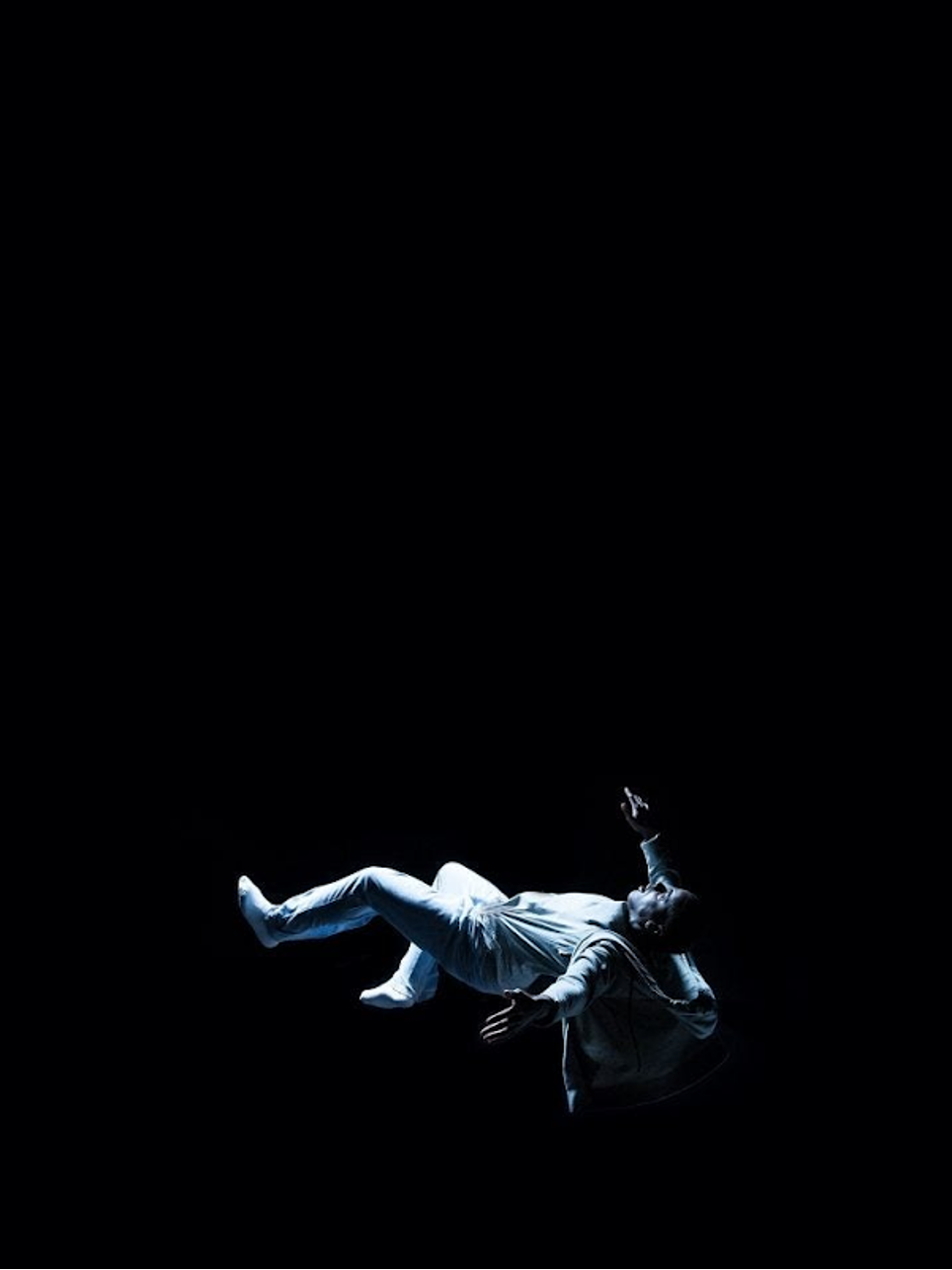
The girlfriend’s mom hypnotizes Chris as a ploy to help him get over his smoking, but in reality she does so to be able to control his body at all times, drawing the border as that between controller and the controlled. Peele shows us what it feels like to be watching your own experience instead of living it. The audience sees the frame shrink into a small square surrounded by utter blackness, symbolizing how Chris is losing his identity and also control of his own body.
The sunken place is a metaphor for what is being subjugated. Being seen has been achieved by modern liberalism; it is now the issue of being seen not for who you are, but rather for who those in power need you to be. These gazes possess you so much that they make you lose your motor skills. They force you to live in the picture that has been created by your observer: admired and possessed, completely objectified for their own use.
ASHLEY: Hitchcock even builds this critique into the film’s script itself. Stella, Jefferies’s nurse, says to him early on, “We’ve become a race of peeping Toms. What people ought to do is get outside their own house and look in for a change." It's played as a throwaway line, a mild scolding. But it might just be the most politically loaded moment in the film. The idea of getting outside your own house to look in refers to stepping outside the position that makes your watching feel natural and neutral, and examining that position from the outside. That is precisely what the majority rarely does. Jefferies doesn't do it. He stays at the window. And the film argues that most people, given the choice, will do the same.
There’s a lot to unpack in this quote. When Stella says “race”, she therefore implies that this isn't individual moral failure but rather something that can be inherited, something collective, and even almost biological. It is a condition we were born into rather than chose, which is exactly how structural privilege operates. You don't choose to be positioned at the window. You just are. And the window feels so natural that you forget it's even there. And the “house” Stella speaks of is less of a physical building and more of a position. A set of assumptions about the world that feel like reality because you've lived inside them long enough. To get outside your own house is to do something most people find genuinely threatening, that is to see your own position as a position rather than as neutral ground. The majority rarely does this. Whereas the minority has no other choice but to do it constantly, because the house was never built for them in the first place.
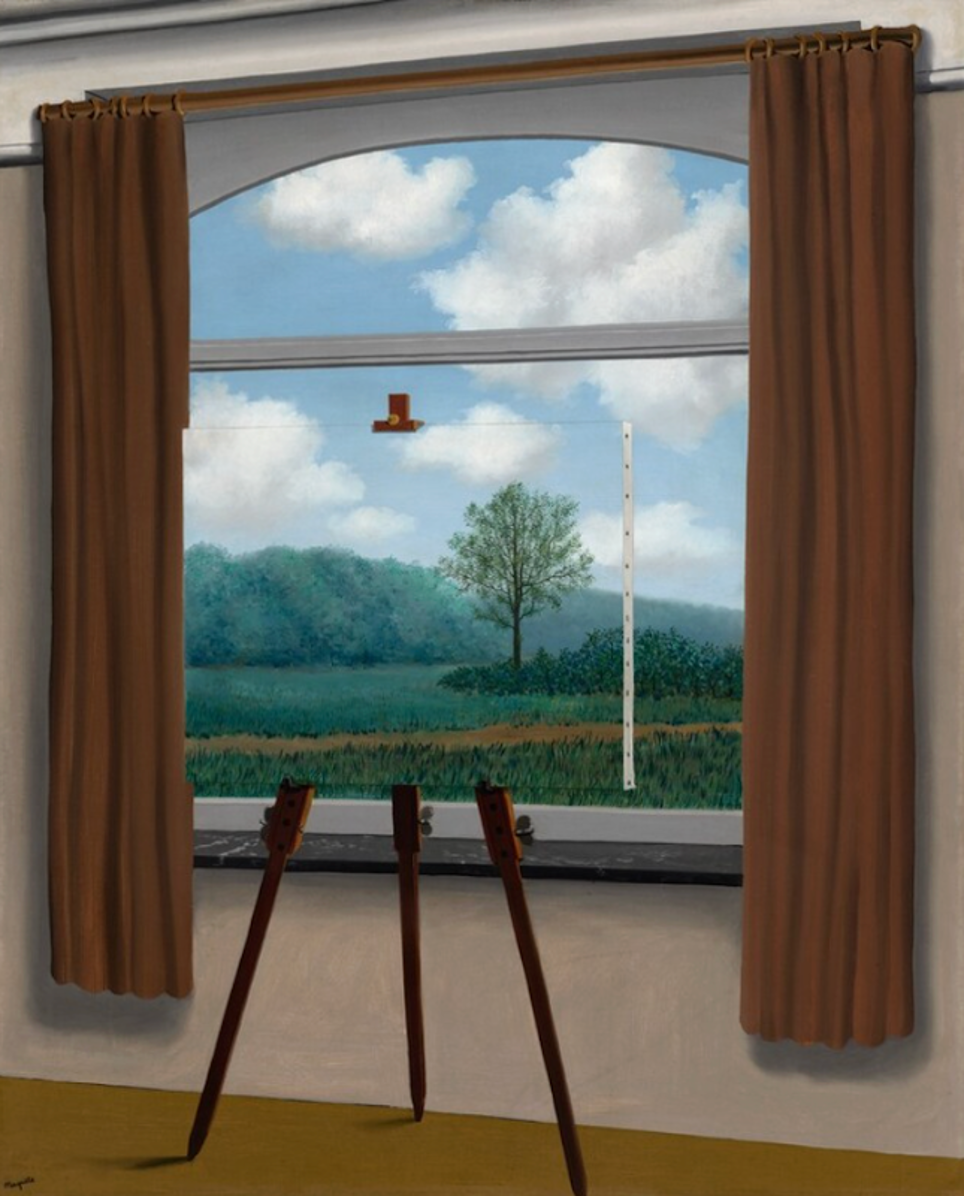
René Magritte’s La Condition Humaine (1933)
LILI: White normativity is discussed elaborately by cultural psychologist, Michael Morris: “white people are people, and the members of other racial groups are people to the extent they resemble white people”. The family and friends in Get Out portray this exact mindset. They view their brains as superior and believe they belong in the superior bodies of black people. In that way, they isolate a race for a trait that they envy. They view them as animals, craving their liver for nutrition or their fat for a good sauce.
Where Get Out becomes a horror film is when it shows us how subtle racism can be. In the first third of the movie, the characters reject racism and claim to be colorblind, calming the audience. But little do we know that modern racism is not about leaving someone out or refusing to see them, but rather about thinking you are so above another that you require the traits that caught your eye.
ASHLEY: Jefferies watches Miss Lonelyhearts with a mixture of pity and entertainment. In the film, she is a woman who eats alone, who dresses hopefully, who sits across from an empty chair, who waits for someone who might never show up. Yes, he is moved by her, but he is also undeniably watching her suffering the way you would watch something sad on television. He never goes to her; he just observes her. Her loneliness is something he witnesses and then interprets through his own frameworks, and incorporates into the story he is constructing about the lives across the courtyard. Even the name he assigns to her is in itself a diagnosis. He has reduced her whole existence to her most visible wound. She isn’t complex, nor is she surprising; she is lonely and nothing else. Later in the film, she nearly takes her own life. Jefferies only watches that too, observing her at her lowest point and doing nothing with that knowledge. The film never really asks if all this curious attention constitutes any kind of responsibility towards her. She does not know she has an audience. She does not know what she means to that audience. Her pain is being consumed without her knowledge or consent.
This is the violence the manifesto identifies when it talks about minorities becoming topics rather than participants. The dominant group still defines the terms of the conversation. It still decides which identities are legible and which people are worth watching. Minorities are invited to be seen but rarely invited to define what that seeing means. Miss Lonelyhearts is everywhere in Jefferies's attention and nowhere in her own narrative. She is entirely abstract.
LILI: What we have done is create fear in being seen. What makes the black race beautiful has become a prize that some people want for their own. And with power residing only in some hands, the bidding begins for who can possess whom.
We are all so hung up on our own experience that we fail to give room for others’. We think that our own retelling or gaze will capture another’s being, but in reality, all it does is capture them in our mind and possess their bodily functions.
And most scarily of all, by viewing these individuals without a voice and controlling their stories, we are taking their race away from them. They no longer exist as black men, but rather as black bodies, subjugated and actionless. In the observer's minds, these bodies become vessels to promote the hierarchies battled for centuries throughout history. If we continue to observe, admire, and obsess, we will become this dystopia.
ASHLEY: Rear Window reveals that the gaze is not just a personal habit. It is a condition Jefferies lives within. He did not choose to be a voyeur for the sake of it. He was immobilised, cut off from direct participation in the world, so watching was all that was left for him to do. But the film suggests this is actually not all that different from how the world typically works. Who narrates and who is narrated? Who holds the camera and who stands in front of it? These are arrangements made long before any individual enters the room. The line is drawn before anyone steps into it, just like how the position that Jefferies occupies at the window as an observer was handed to him way before his leg broke. The window was always there. He just has more time to notice it now.
Films such as this one that include the audience in their complicity are some of my favourite to watch and reflect on. It does not really even tell you that the gaze is wrong. Instead, it puts you inside the gaze and then asks you what you are going to do with that.
If the frame is not neutral, if someone always holds it, then the question is what we owe to the people inside it. Surely not pity. Not rescue from a safe window. It has to be something more demanding than that: the willingness to cross the courtyard and actually meet someone on their own terms. Jefferies never achieves this. The film ends with him in the same chair, at the same window, with two broken legs now instead of one. He watched when he should have moved. Rear Window paints a portrait of what it looks like to mistake observation for understanding and visibility for knowledge.
Suffice to say, as long as the window stays open, the line stays drawn. The question isn’t whether the gaze causes harm. We know it does. The question is whether recognising the harm it causes is ever enough.
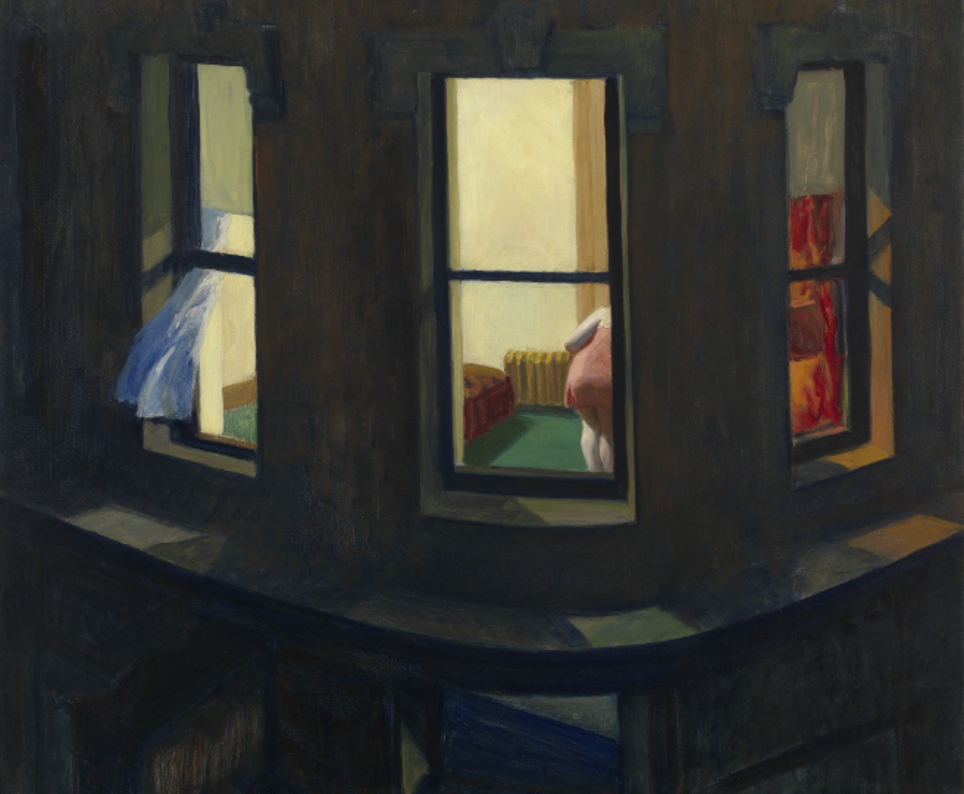
Edward Hopper's Night Windows (1928)