MY LIMINAL SPACE IS: APARTMENT BLOCK HALLWAYS

It’s a cold winter day, and I forgot my gloves at home. Some kids are running through the snow, playing tag, their laughter sharp against the air. Meanwhile, I can barely move my fingers. I turn to my friend and ask if we can go inside for a little while. She says yes; she lives close by, and she’s sure her mother won’t mind if we sit in the living room.

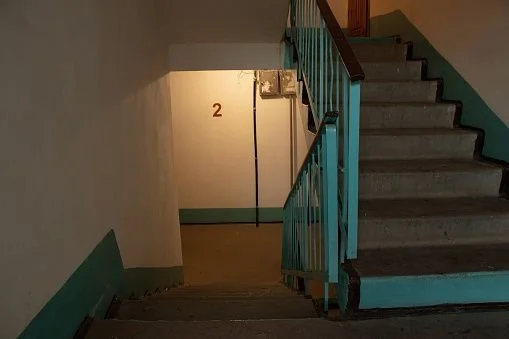
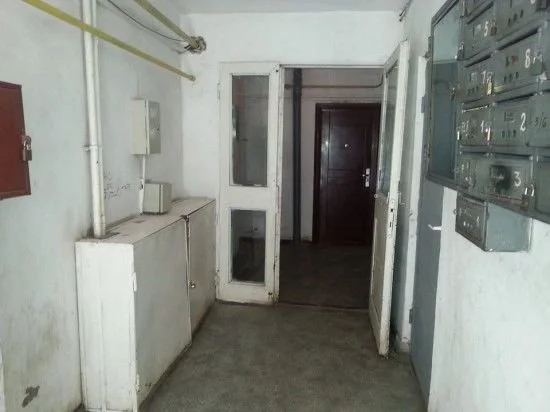
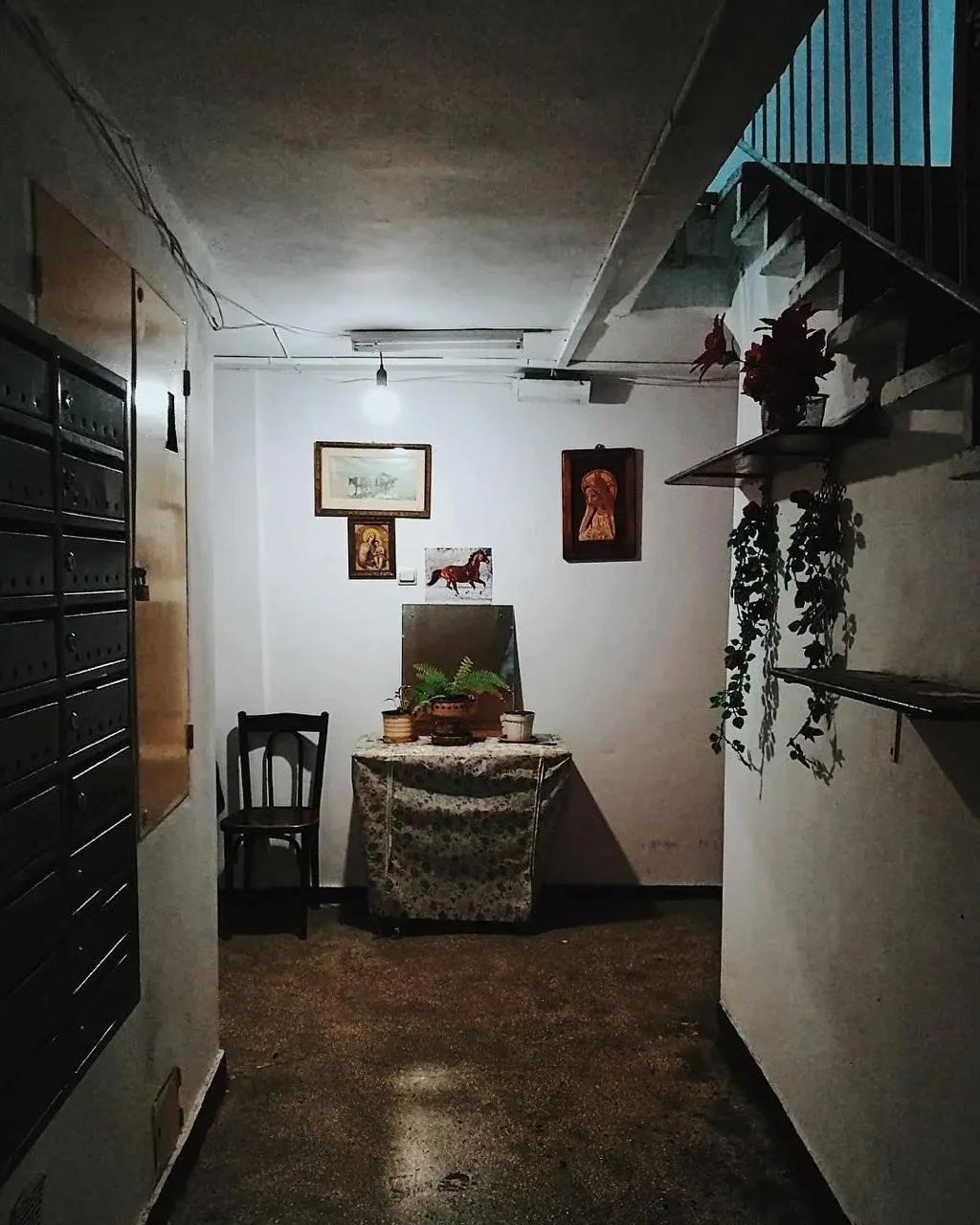
We enter her apartment block. Our faint laughter suddenly feels enormous as it bounces off the cold walls of the hallway. The air is wet and sterile, heavy with darkness. We walk slowly, our eyes still adjusting to the lack of light. There’s no one else around. Each step echoes too loudly, multiplied by the narrowness of the space, as if the building itself were listening. Then, we enter her apartment. Inside, the air is warm. The windows are fogged up from cooking. There’s a patterned rug on the floor, coats thrown over chairs, the quiet hum of a TV in the background. I suddenly forget about the cold as I melt into her couch as we wait for her mother to pour us a warm cup of tea.
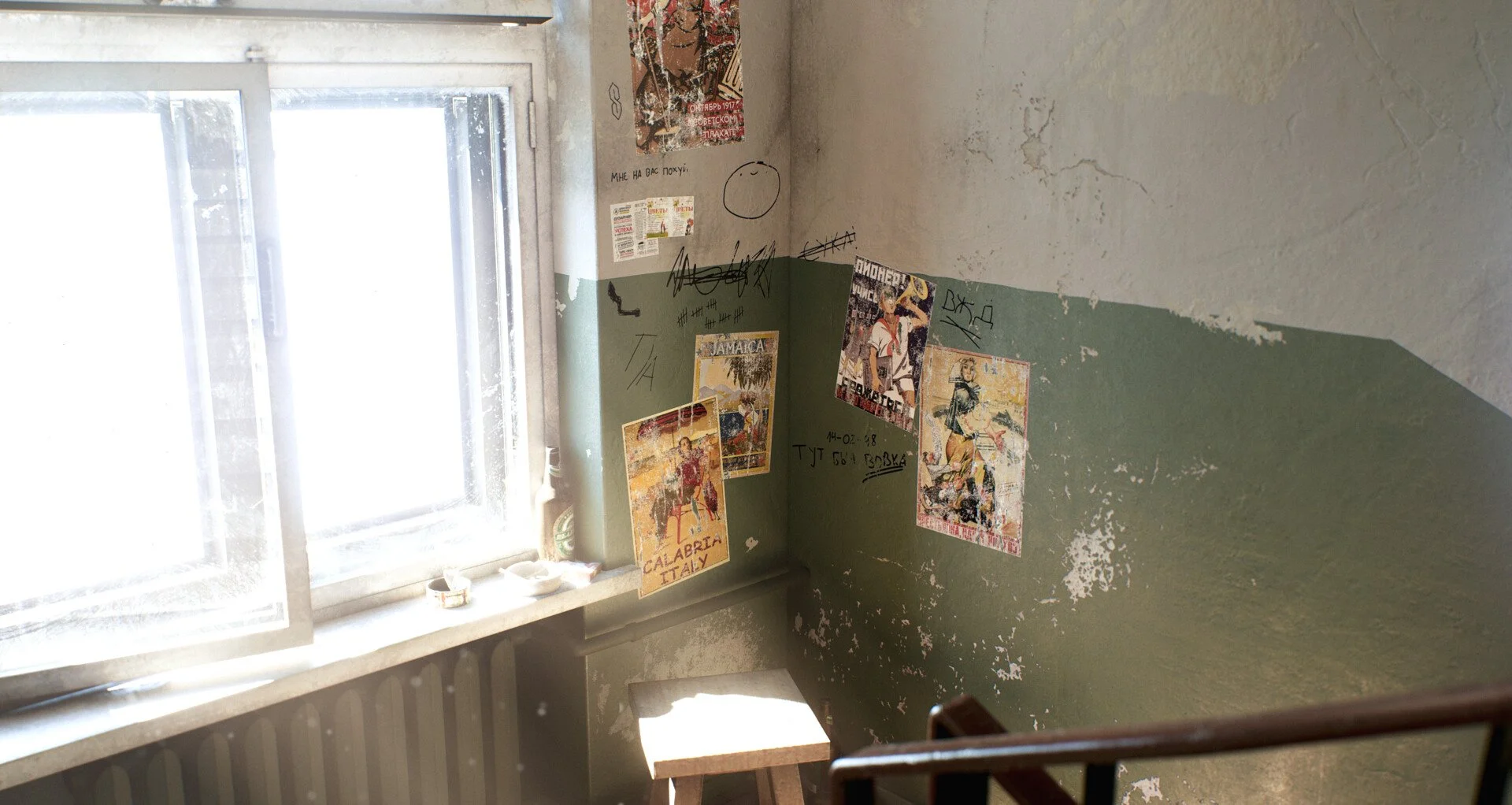
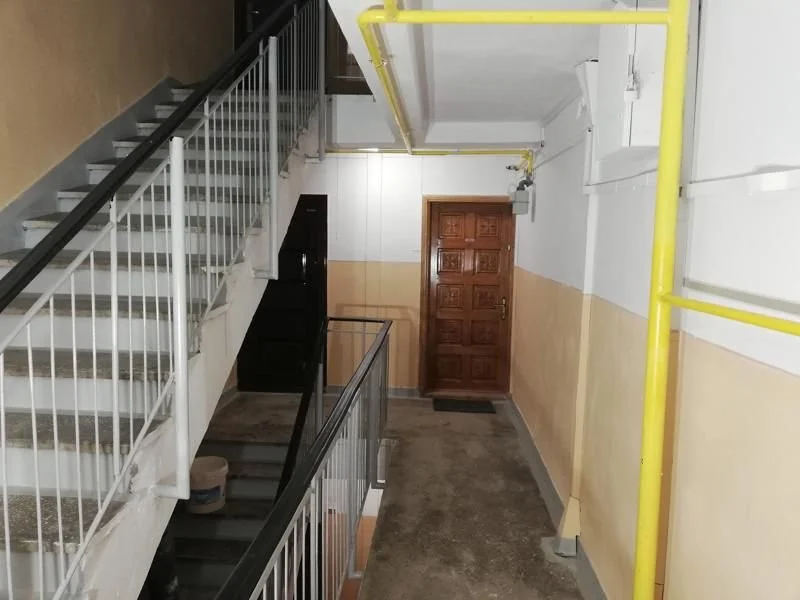
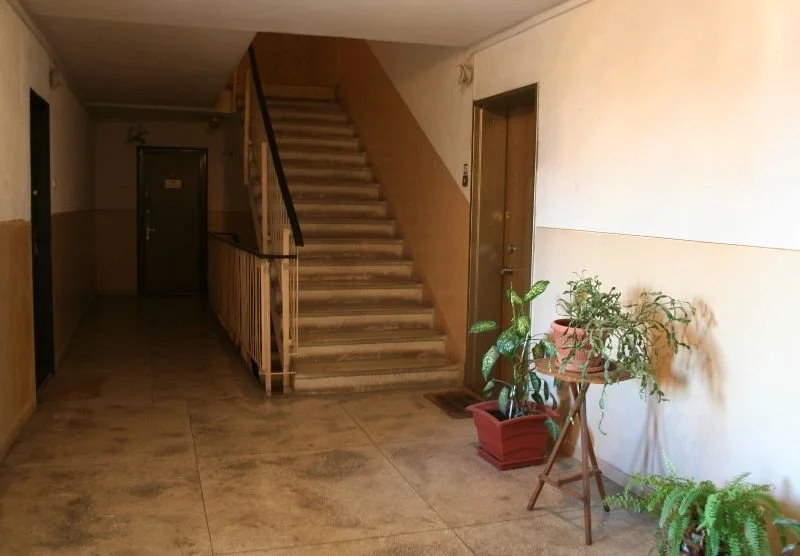
Most of my childhood and teenage memories share the same setting: the hallways of my friends’ apartment blocks. The same damp, cold air. The same infinite walls lined with heavy wooden doors. The same eerie quiet, broken only by faint sounds of muffled voices leaking from inside.

Walking inside these buildings, it’s almost impossible to believe how much life exists behind those doors. Sometimes, you find attempts to bring some warmth into these spaces in the form of random flowerpots placed near the railing, a fading doormat or a crooked nameplate. Somehow, instead of softening the space, these gestures only emphasize how lifeless it is.

I spent so much of my life roaming around these spaces that they have turned into a leitmotif of my upbringing. It feels like I’ve stood in a colorless, freezing cold hallway in anticipation of a door opening for most of my life.

For this reason, sometimes, my memories get mixed up. It could be entirely possible for my middle school best friend to be neighbours with my college boyfriend’s parents, for all I remember. The hallways have the power to fiddle
with my thoughts in their own mysterious way.

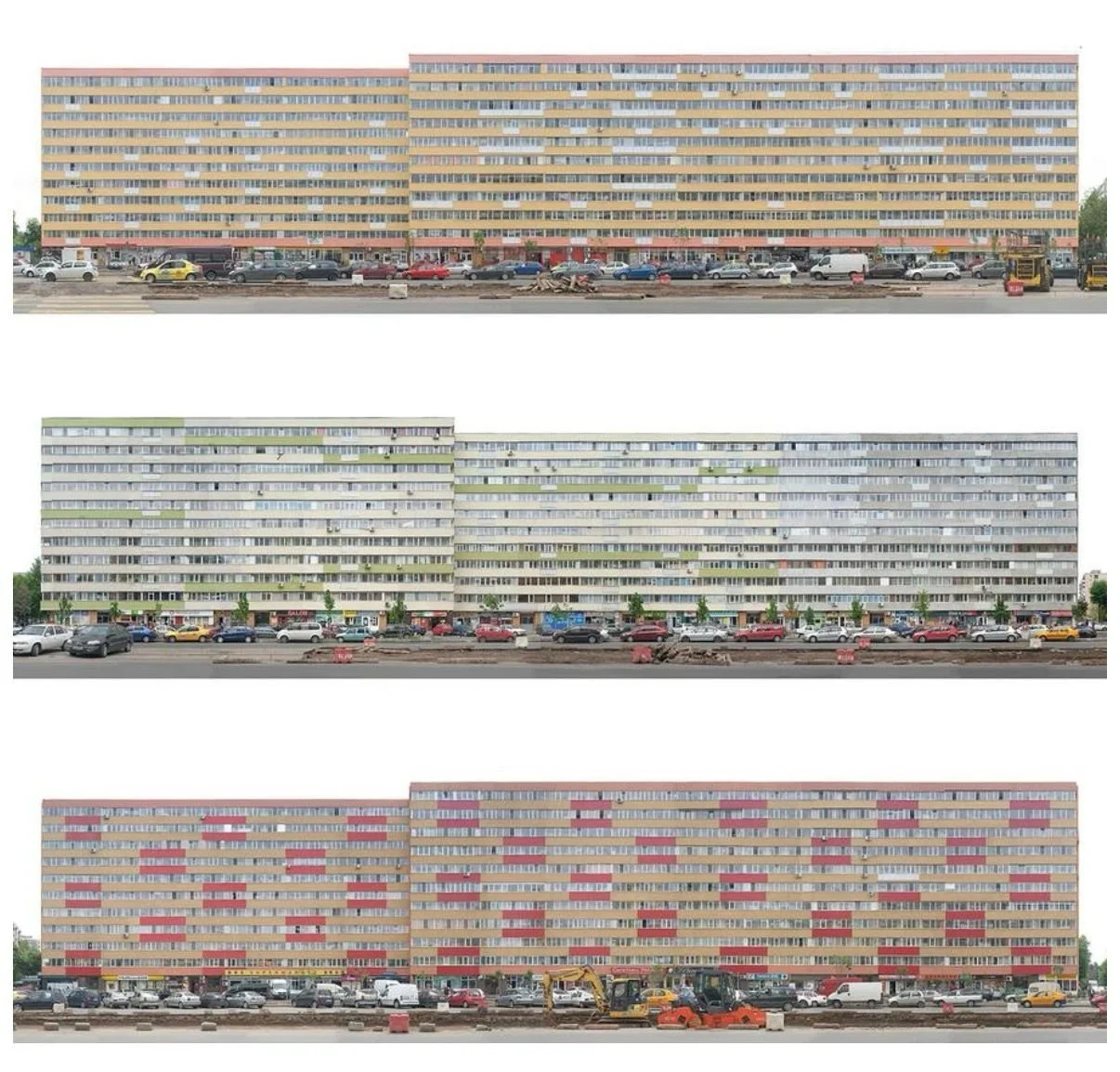
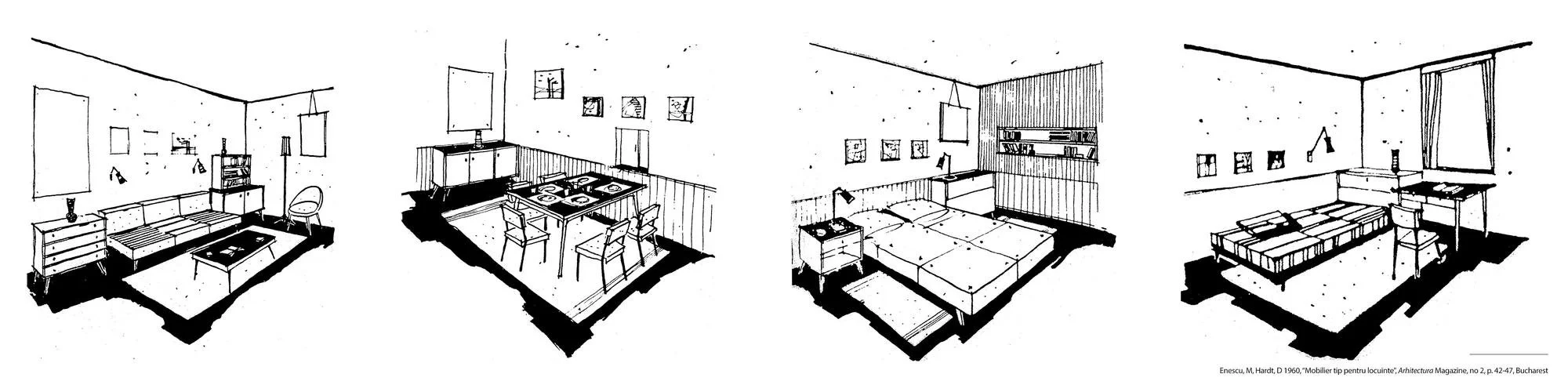
Apartment blocks are a staple of Soviet communist architecture. After the Iron Curtain was drawn, most cities across Eastern Europe adopted this style. In the spirit of enforced communal life, these buildings were optimized so that everyone occupied a similar space. That is why they all look the same. The idea behind this architecture was to make people feel small and interchangeable, like cogs in a much larger machine.

Bucharest is particularly known for its vast stretch of apartment buildings that tower over broad boulevards. Romania’s last communist dictator, a scrawny old man obsessed with grandeur and delusionally self-centered, wanted to blend Paris’s lush avenues with typical Stalin-era city planning, resulting in a city of concrete monoliths where everyone was allotted a small, standardized unit. For this project to be completed, thousands of people were violently forced out of their homes and made to watch their beautiful, centuries-old houses being torn down completely, making space for state-imposed housing blocks for workers brought in from neighboring villages.

While families have managed to carve out personal worlds inside their apartments, the hallways remain untouched by individuality. Their lack of detail and repetitive geometry both contribute to a sense of being trapped in an indeterminate space. No matter where you are, what building, what street, what city, you always seem to end up in the same place, again and again.

Another key purpose of these buildings was to keep people outside – some apartments were more akin to dormitories rather than actual living spaces. In the past, work was supposed to be the only meaningful activity in one’s life, so there was no real reason why people should spend time in their homes except to rest. Only the stairs remember the struggle that countless souls had to endure during that time. And, like most forceful state interventions back in the 1970’s and 1980’s, this form of co-living left a permanent scar on the generations that spent most of their lives under communist rule. Years of living in loneliness and fear made people lose trust even in their closest neighbors, leading to a nearly non-existent sense of community. Only now, long after the regime collapsed, the collective trauma of the past is starting to fade away, and kindness is slowly making its way from door to door.

And, as strange as it may seem, these hallways are embedded in my idea of home. I find a weird sense of comfort in their bleakness. I’ll always have the feeling that something good will follow – that when a door opens, I will be welcomed in, and I will step into someone’s world, filled with warmth and light.

Every time I arrive back in Bucharest, the endless rows of apartment blocks remind me of how much of my past is similar to so many other people’s experiences. There’s a certain ease in realizing that your life is not actually as unique as you would think, and that there are such spaces you unknowingly share with strangers in an infinite gallery of memories.

The hallways are proof that no matter what, life always prevails.
They were built as functional spaces meant to be crossed and to guide people from one place to another, yet so much shared history lingers within their walls. We move through them without stopping, guided more by instinct than direction, carrying the weight of what came before and the promise of what waits ahead.