Although some might view living and existing as synonyms, I see the boundary between them as a space of presence or the lack thereof: a chillingly liminal space.
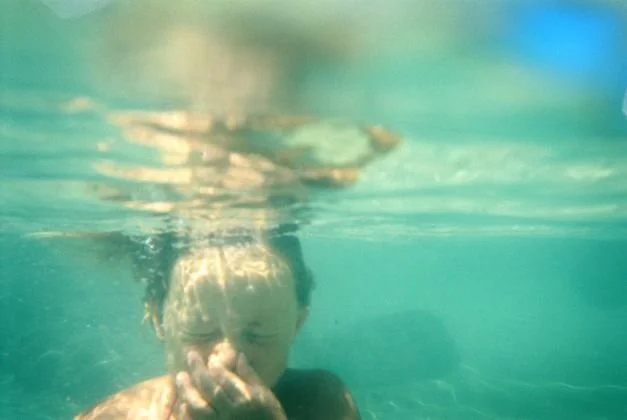
As a child, we live every moment: we smell the mustard colored flowers and taste the sand to test for similarities with grain. We cry when our mom drops us off at kindergarten and hurt when our beloved stuffed bear goes missing. The world is fresh and the feelings that come with it are like a sea of new experiences. Unaware, we confront the swim without the fear of the pain these novelties could cause. But as we grow older, with age and experiences, the waves become familiar, and we learn that swimming underwater may shield us from the waves we have previously encountered.

In school we tighten our circle to those we know will stay; the ones we know won’t hurt us. At home, we start tuning out arguments from downstairs that previously made us cry. The many boyfriends we had in kindergarten eventually turn into none, protecting against the threat of heart aches. The color of new experiences gradually fades into a monotone canvas.
Whether it is the loop of a spotify playlist that never lets a negative thought –or any thought for that matter– through, or the inner drive to busy yourself every moment of the day, we all know how to silence the negativity and exist in a world of oblivious bliss.
For some, it is vacant fathers who indoctrinated the superiority of being liminally absent, while for others, it is the mere fear of losing their dearest babbo that encouraged them to crawl into the world of dissociation. Whether it is not to love or to love too much, the escape from pain and sorrow is far too tempting.
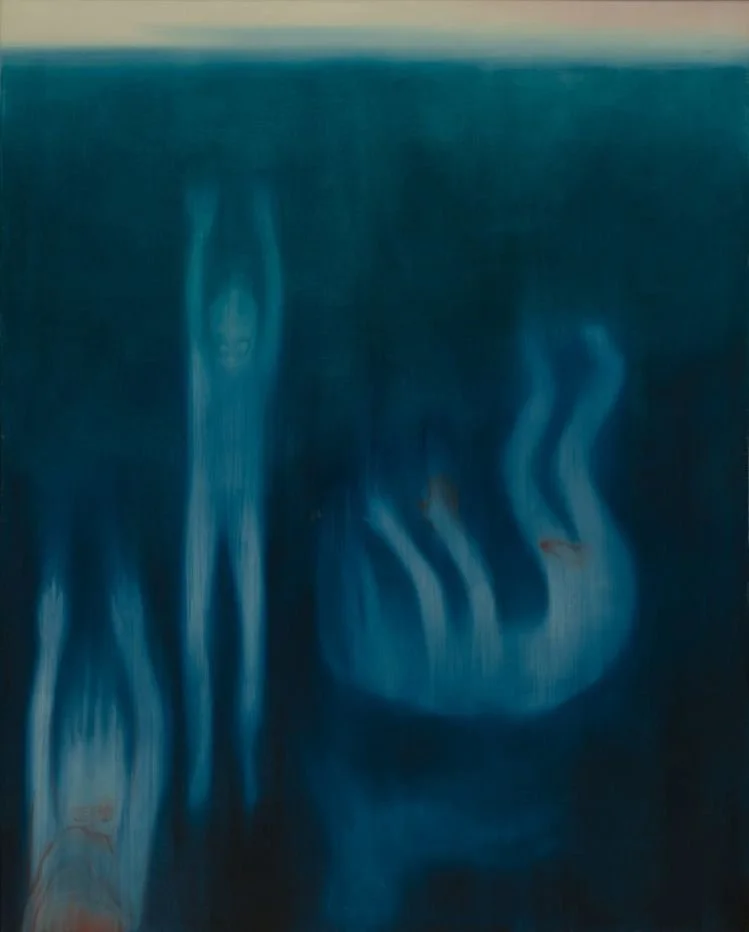
If we make the choice of ignoring pain rather than confronting it, we become a space that is not occupied by emotions, one numb to hurt. When we make the transition from living to existing, who do we become? Who are we without the ups and downs? Do we carry a liminal space with us or do the spaces we inhabit become liminal because of our absence? The airport, subway, and bed persist in our absence. They appear objects that can house our flesh and bones while our mind disintegrates. The flight from one home to another, bearing the sorrow of leaving things behind. The ride home from a day full of laughter to the silence of your kitchen. The sleep that contains all the unwanted emotions left ignored. These transitions protest against living in the present; they beg you to look back at the past and take a breath from underneath the water you so deliberately dove into the depths of.
Eternal sunshine of the spotless mind!
Each pray'r accepted, and each wish resign'd;
Labour and rest, that equal periods keep;
"Obedient slumbers that can wake and weep;"
(Eloisa to Abelard by Alexander Pope)
But spotless rays of sunshine cannot exist in the depths of our liminality. By choosing to dissociate, our world becomes a haze of emotionless liquid. In order to experience sunshine, we must accept that it is not eternal, and settle for its temporary nature. We must sacrifice the rare thunder for those beautiful moments.
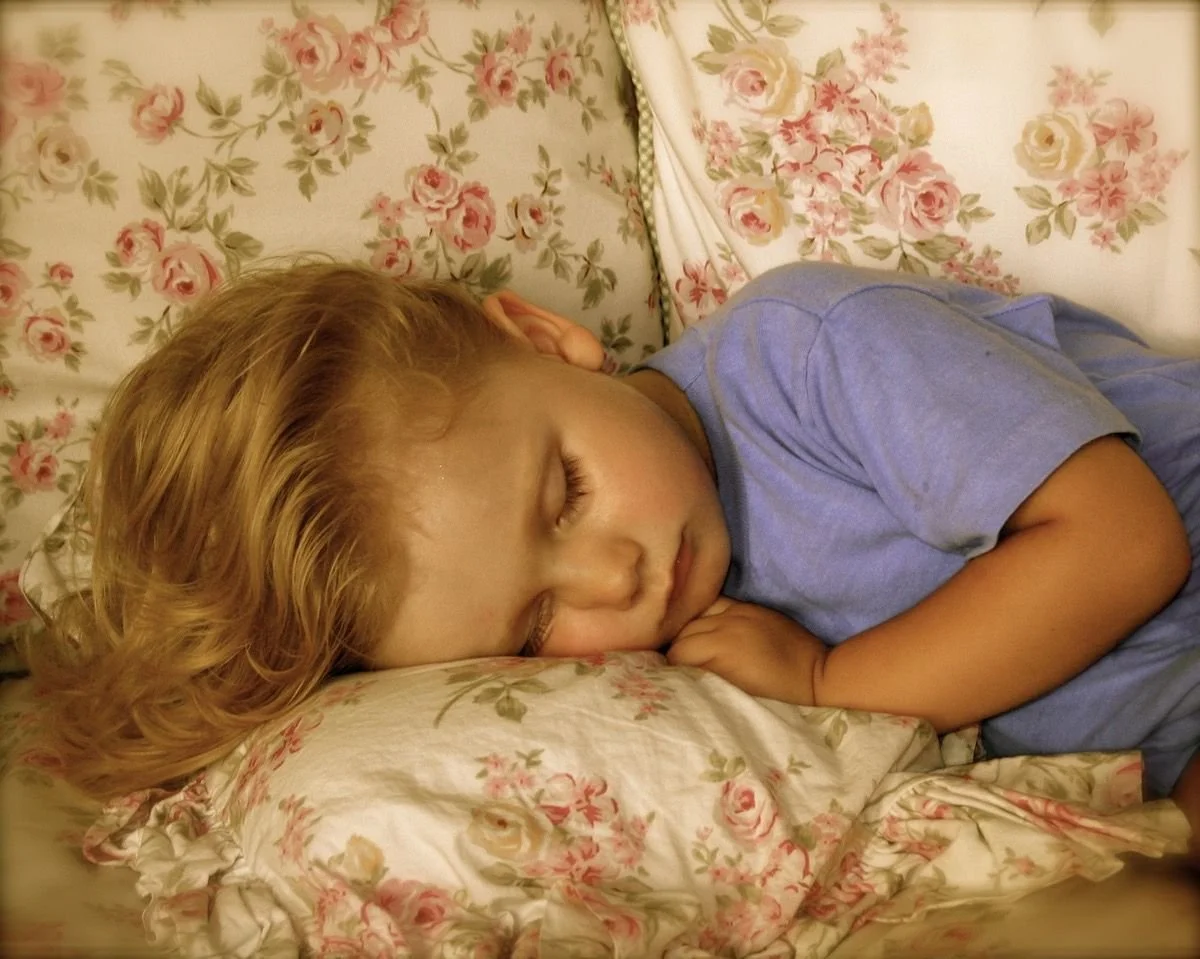
For our dreams will rush off to the places, people, and feelings we have been so purposefully avoiding. Our real self cannot be the one that is hooked to the modern noise of music and cannot fall asleep to the solemn silence of the pillow, scared of the places the mind will wander when left outside your own strict control. What are we if not our unconscious? We cannot run forever.
The grief or threat of future grief is what nudges me into my liminality, but what is grief if it is not the very act of preserving love, or trying to? In our transition into existence, we destroy the love we were trying to preserve. We let go of what our fear warned us about: losing love.
Losing someone is not painful without love. It is the presence of love that makes the loss grief. By choosing existence, we let the potential pain win against the eternal love we have for the lost. Liminality eliminates the sensation we live to feel, and our fear slowly leads to the loss of ourselves too.
These two selves –the existing and living– cannot cohabit our body, at least not mine. The extremes are where you can find me, because the boundary takes away both the prize of the present and the preservation of pain. The impossibility of choosing both existing and living is much like running after a train that is passing whilst also trying to get on the train present on the other platform. Before rushing to the tracks, I must decide whether to run after presence or numbness.
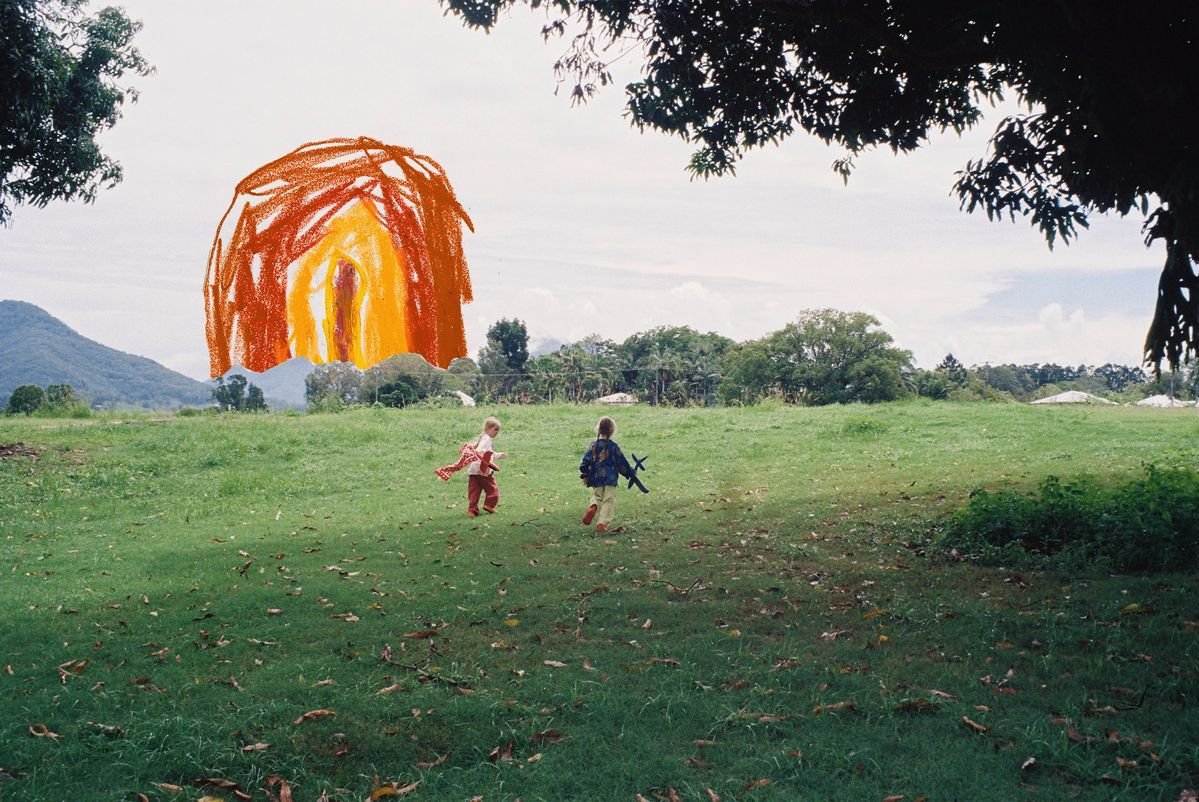
Indeed, the joy of presence prevails. My monotone escape to my mind's liminal space cannot sustain me. For I strive to be the same child who walked to school with three ponytails — one pink, one blue, and of course one with an orange elastic.
I want to be the same child who spelled every word wrong in her journal about her devastating day in the second grade. I hope to be the same child who played soccer with so much pride despite only starting last Wednesday. I will be the same child who befriends the grandpa living next door because he offered me a big watermelon.
I need to be this child to feel the present, the new, and become entirely myself.
To live is to carry her with me no matter where I go.