
Being Seen Before Being Known
Even when you think you have sorted it out for good, the question always comes back, shedding new light on everything you thought you knew. Who are you? From one existential crisis to the next, we navigate this ever-evolving inner journey in search for our rightful place in this world. Each of us is the only one who can steer our own ship. Yet, the sea is filled with countless others undertaking the same kind of voyage.
Our generation seems to be one of the first to stare into the depths of its soul on such a scale. In our modern individualistic societies, there is a pressure to define ourselves, to know who we are deep down, argues Giddens in The Consequences of Modernity. There is no denying that it is a profoundly personal experience, but it is no less a socially constructed norm, a social fact.
But society hasn’t sorted it out either. While it extols this new ideal of self-actualization, it still doesn’t know how to handle the outcomes of some of these personal growth endeavors. Society as a whole is not fully at ease when minorities embrace the minority part of their identity, by dressing and presenting themselves in a certain way, by socializing with certain people, by using a particular vocabulary or speaking a certain language, or simply by labeling themselves. There are no norms that could restrict your self-expression anymore… until there are.
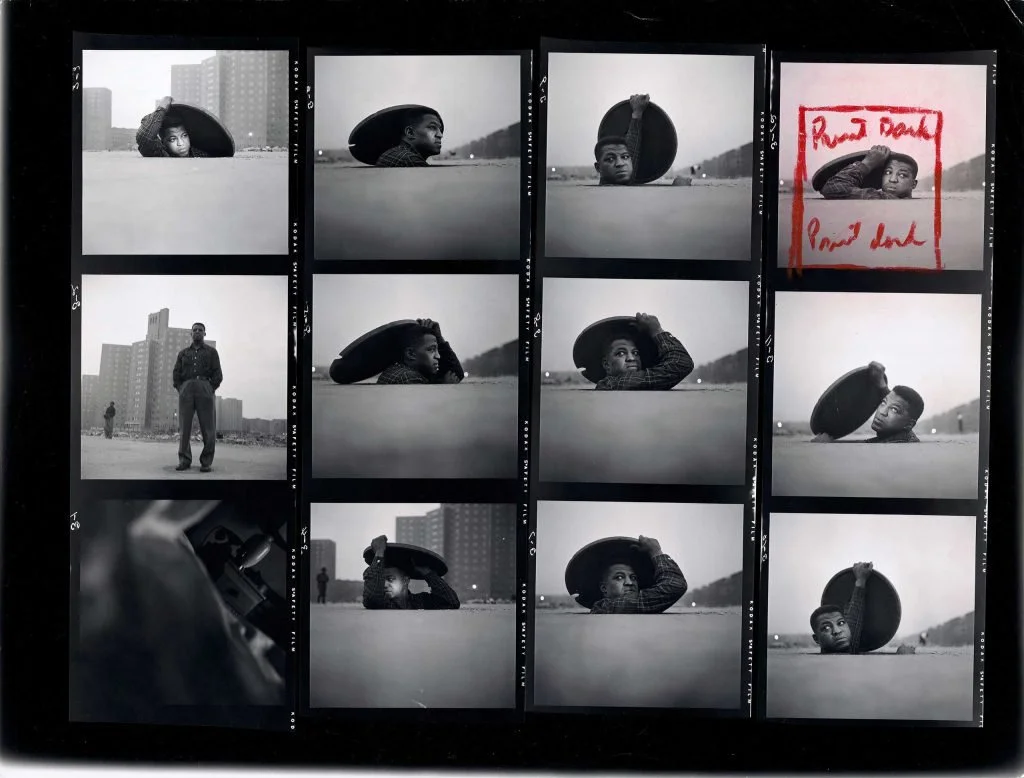
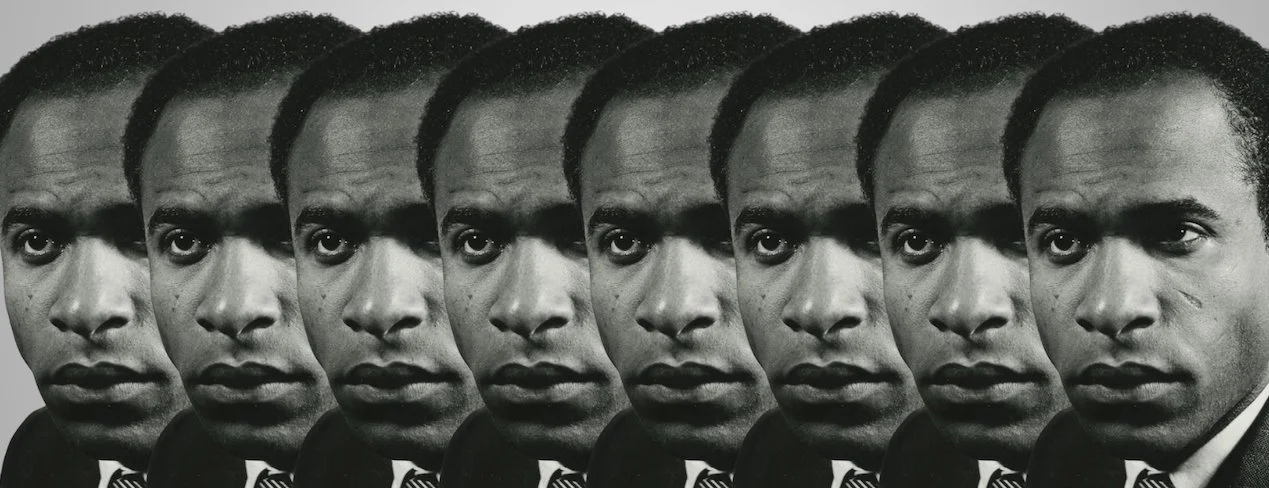
A Man Becomes Invisible, Life story no. 36997 (1952), Gordon Parks
The burden of becoming oneself is already hard enough. In The Cult of Achievement, sociologist Alain Ehrenberg contends that while it is expected of individuals to be more autonomous in becoming themselves, this increased autonomy comes with a cost: the increased weight of responsibility. There will be no feeling of guilt, no discipline to put you back on track, if you stray from the old norms. They have more or less disappeared, but not without giving way to another norm: taking personal initiative in the absence of guidelines. In his subsequent volume, The Weariness of Self, Ehrenberg shows how depression, understood as a lack of motivation and energy to become oneself, became the illness of our time. It is not anymore about your deviant desire to defy the norms, but about the vertigo felt when one is faced with the weight of infinite possibilities.
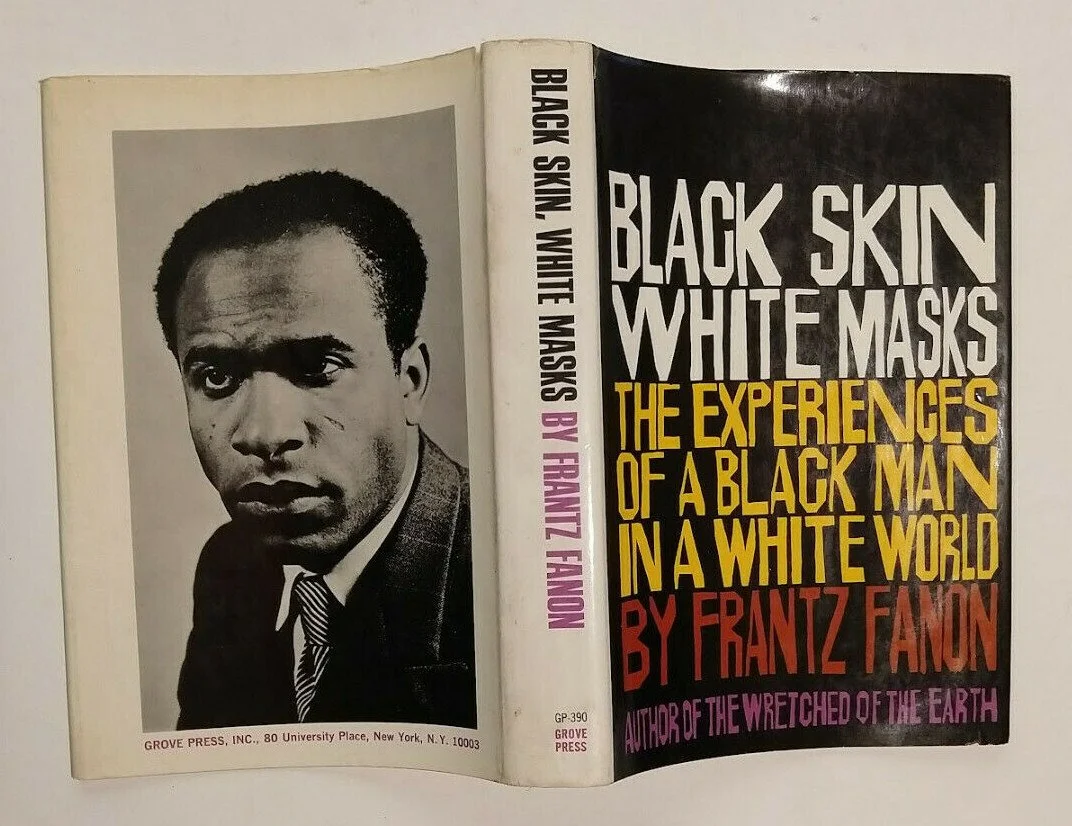
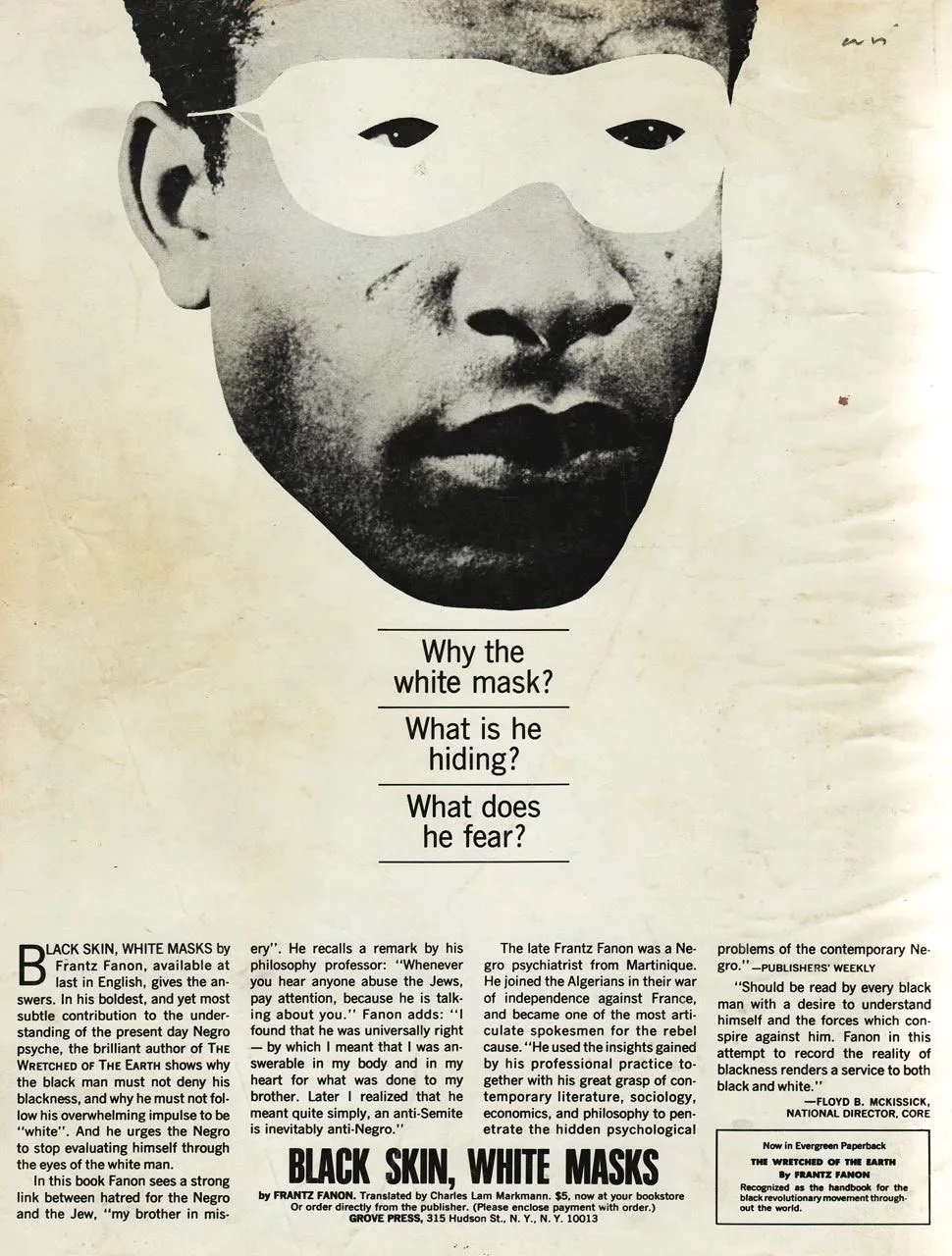
In addition to striving, like all of us, to become themselves, minorities also have to endure the constraints imposed by the dominant gaze. In their eyes, when they realize you belong to a minority, you instantly become the representative of everything this minority stands for. In Black Skins, White Masks, philosopher Frantz Fanon recalls such an experience. Fanon was a French citizen, born on the Caribbean island of Martinique. He received a standard French republican education and was so attached to his French identity that during World War II he volunteered to fight against the Nazis in the Battle of France. It was upon his arrival on the European continent that he discovered what being Black meant in the eyes of White people who think whiteness is the norm, the standard.
A child noticed him and immediately shouted « Look! a n****! ».
Fanon was assimilated to the colonial African troops who did not benefit at the time from the full citizenship like he did, only because of the similarity of their skin color. But Fanon felt nothing like an African, he felt more «civilized». However, to his fellow citizens, none of this mattered. From the first glance, Fanon was irrevocably essentialized to his skin color. Without the white gaze, his blackness would never have been highlighted as a difference. He was never thought of as Frantz. He did not exist in his own right, but only as the representative of his entire racial group. This control, this stranglehold that the dominant group has over how minorities define themselves, is dehumanizing and burdensome.
Sometimes, the minority you belong to is invisible until you reveal it, for instance when you belong to a sexual minority. Because becoming oneself is nowadays interpreted as an autonomous act, revealing your sexuality, identifying with a minority — that is to defy established social norms — is consequently perceived as a choice and as a political revendication.
French politician Lucie Castets, explained in L’Humanité, that when she was selected by the majoritarian left-wing coalition to become Prime Minister in the summer of 2024, she decided to come out publicly. It was a way for her to take control of her own identity before potentially ill-intentioned others could seize it and define her—although the interview was reframed without her knowledge in order to come up with a sensationalist headline about her coming out.
Castets believes as well that the intimate is a political matter. Revealing that she was married to a woman was also an activist act intended to empower other queer women. The necessity of coming together as a community was, by the way, reaffirmed given the violent backlash she received following her statement.
In particular, she was criticized by another politician for not keeping private what should remain private. Castets answered: «You keep that to yourself—unless you’re straight… The number of politicians, guys over 60, who’ve made the cover […] of Paris Match with their cream-colored Labrador, their kids, and their suburban home—no one has a problem with that. It’s only when you don’t fit into a very traditional family model that people say, “Oh look, she’s turning it into a political issue.”»
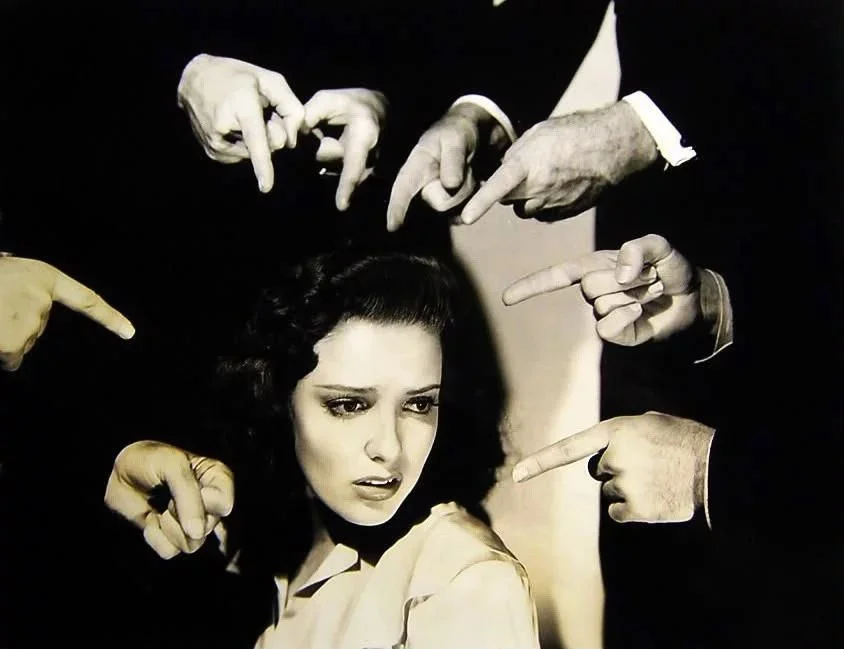
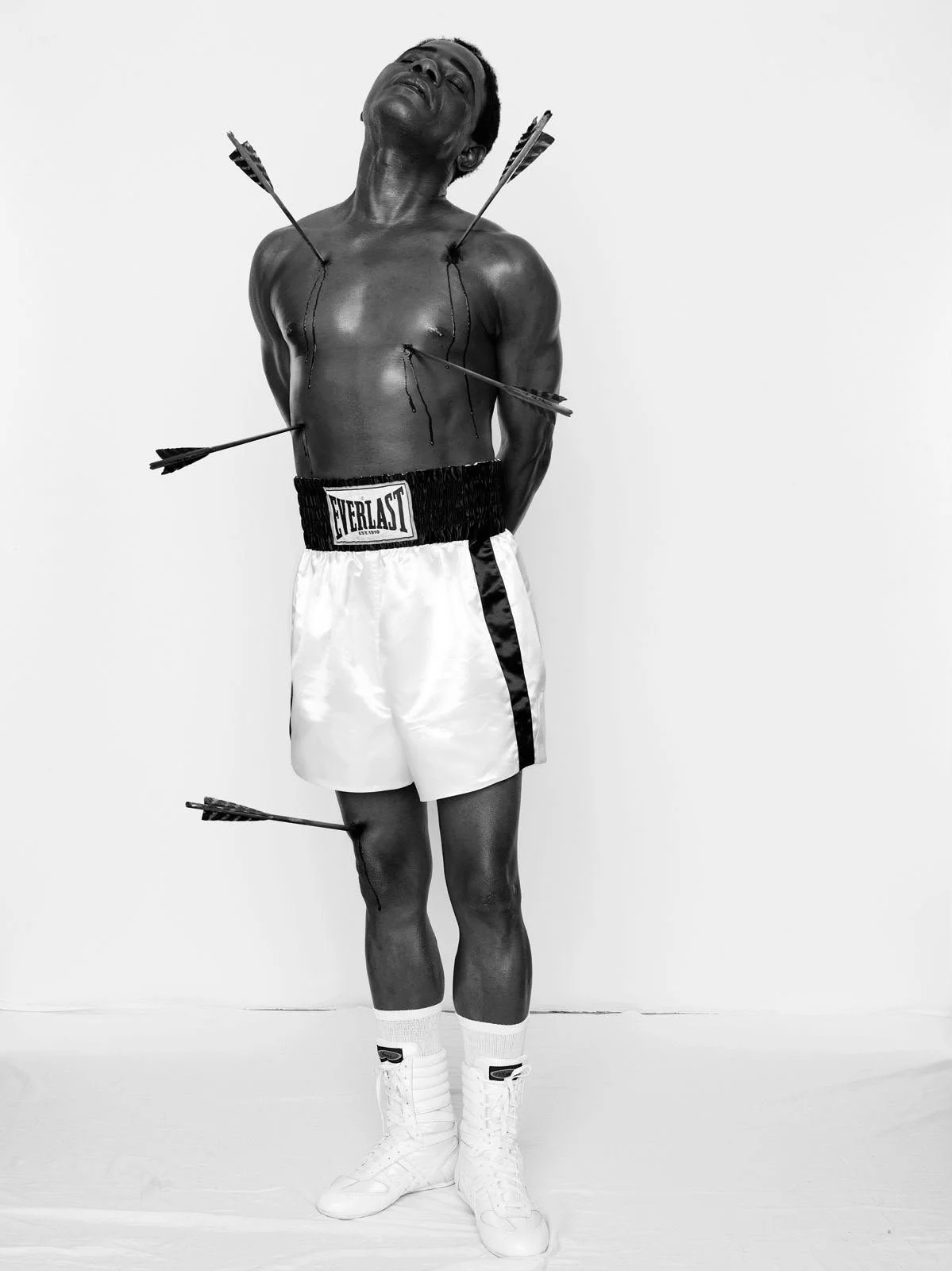
This dominant gaze, which automatically casts minorities aside and labels them as different, gives rise to a constant stream of microaggressions, the weight of which those who fit the norm cannot remotely comprehend. White people do not realize they are privileged: it is their gaze that categorizes. In his paper Reflection on White Privilege, philosopher Pierre Tevanian describes what happens when that gaze is directed back to White people. Within anti-racist groups, the activism of White individuals is often called into question, as they can’t remotely understand what being Black implies. As a result, they feel a certain unease, because for once they are confronted with their own skin color—an experience that is usually completely unknown to them. Not to mention overt and unabashed racism, the dominant groups’ ignorance of their own dominance contributes to perpetuating internalized and structural racism.
In an interesting ethnographic study, Le faciès du contrôle (a play on the French expression for racial profiling), sociologist Nicolas Jounin shows that while Paris’ metro ticket inspectors acknowledge that they control people of color more than average, they dismiss any allegation of racial profiling or racism. On the contrary, they claim that they choose whose ticket to control based on a kind of instinct. In other words, it is their habitus that is at work—representations that operate on an unconscious level and in a structural manner.
Regardless of the justification, if the statistics show that race is the determining factor in identity checks, we are merely highlighting a social reality: the existence of discrimination against racial minorities, based on prejudice and the assumption that minorities are fundamentally different from the norm.
One of the artists who illustrates the burden of becoming oneself most powerfully is Shirin Neshat. Born in Iran in 1957, the photographer, filmmaker, and visual artist has dedicated much of her work to portraying the complexity of Iranian identity, particularly the condition of Iranian women caught between tradition, exile, religion, and political repression.
Through her camera, individuals are never reduced to stereotypes or political symbols. Instead, their faces, gestures, and silences become deeply human expressions of memory, longing, and resistance. Her portraits often confront the viewer directly, creating the unsettling impression that the subject is reclaiming control over the gaze imposed upon them.
Neshat’s work has received international acclaim precisely because of this sincerity and complexity. Her photographic series Women of Allah brought her worldwide recognition during the 1990s. Combining black-and-white portraits of veiled women with Persian calligraphy written across their skin and images of weapons, the series challenged Western audiences’ simplistic perceptions of Muslim women as either submissive victims or dangerous fanatics.
Rather than offering a clear political message, Neshat forces viewers to confront their own assumptions. The women in her photographs embody various contrasts, such as strength versus vulnerability, devotion versus rebellion, and even individuality versus collective identity.
Her work has since been exhibited in some of the world’s most prestigious institutions, including the Whitney Museum of American Art in New York and the Venice Biennale, where she was awarded the Silver Lion for Best Director in 1999. Critics have praised her ability to give visual form to experiences that are often misunderstood or silenced, particularly those of women living between multiple cultures.
Her art also extends beyond photography. In 2009, Neshat directed Women Without Men, a film adapted from Shahrnush Parsipur’s novel of the same name. Set during the 1953 coup d’état in Iran, the film follows the intertwined lives of four Iranian women, each struggling against the social and political constraints imposed upon them.
One seeks independence from an oppressive marriage, another attempts to escape expectations surrounding femininity and sexuality, while others search for dignity and freedom in a society that constantly seeks to define them from the outside. Although their stories are different, they are united by the desire to exist as complete individuals rather than as projections of what society expects them to be. Through poetic imagery and dreamlike sequences, Neshat portrays the inner conflict of women trying to reconcile personal identity with the suffocating pressure of social norms.
The importance of representation for minorities becomes especially visible through artists such as Shirin Neshat. Those who belong to the dominant group can sympathize, but they can never fully understand what it means to constantly live under the weight of the dominant gaze.
Representation therefore becomes essential, not only to raise awareness among outsiders, but also to allow minorities to recognize themselves in stories that validate their experiences. Neshat’s work resonated strongly with Western audiences because it revealed the humanity and individuality hidden behind political clichés about Iranian women. By portraying their struggles with nuance and dignity, she demonstrates that identity is never reducible to a single label, even when society insists on defining people through it.
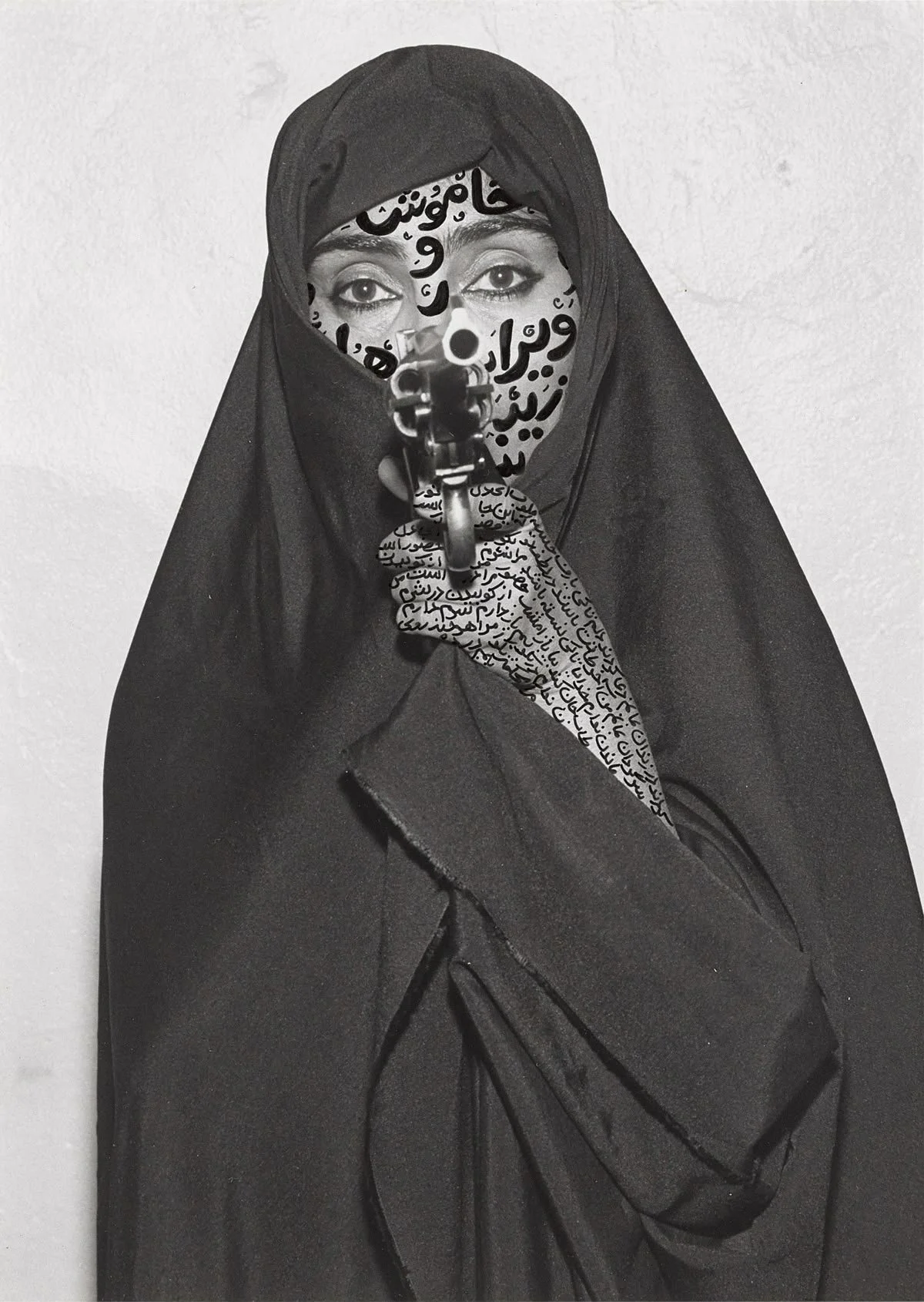
Rebellious Silence, from the series Women of Allah (1994), Shrin Neshat
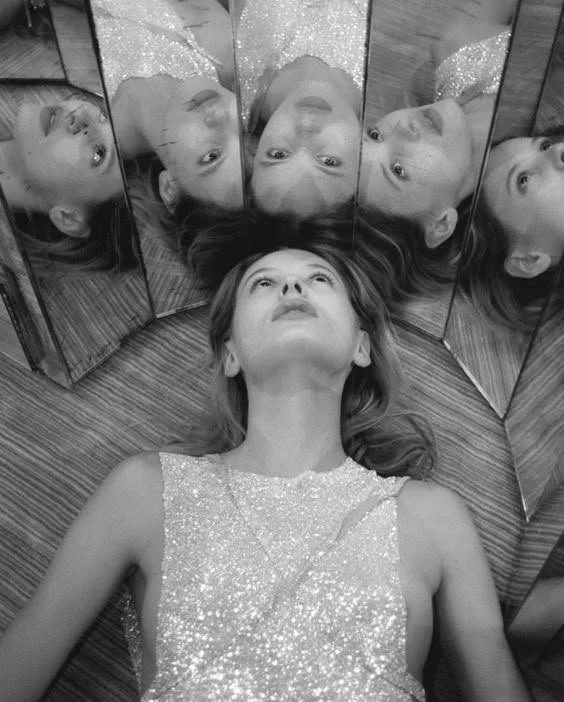
In the eyes of the dominant group, the minority part of yourself becomes a fundamental, defining part of your personality. But what if you did not want that? You just wanted to be you. What if you wanted to be known for so many other things: how good of a friend you are, how much you love music, how curious you are?
It may be tempting to try to hide the fact that you belong to a minority, or at least, to avoid mentioning it. Just so that people can focus on you. But even though it may not be a huge part of your identity, it’s still there, and you can’t deny it.
I don't want to pretend to be someone else by ignoring this part of myself that I undeniably am.
And after all, no one can simply wipe the slate clean of the social norms that all of us have no choice but to navigate. It is in this light that coming to terms with one's identity as a member of a minority is first and foremost a matter of social survival.
This is how you find a sense of belonging within a group that will not judge you for being other, for not fitting the expectations of the dominant group… And like in a virtuous circle, your identity grows stronger.