
MY LIMINAL SPACE IS: THE AIRPORT
The Airport: A Place That Doesn’t Belong to Anyone
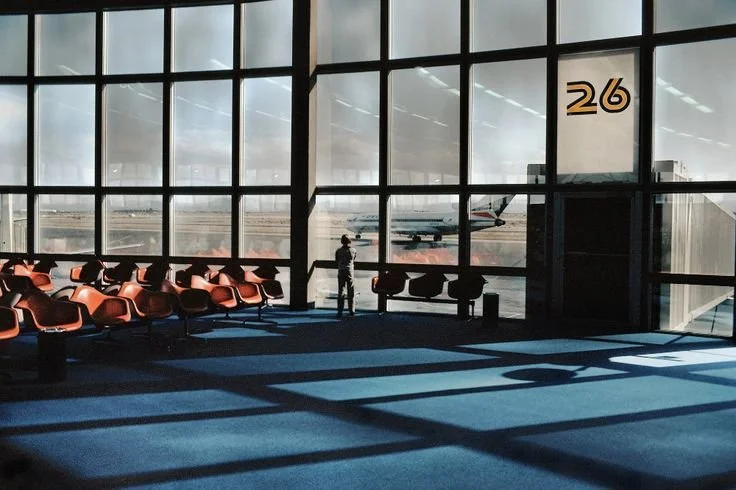
Las Vegas airport, photographed by Harry Gruyaert (1982)
An airport is not meant to hold you. You pass through it briefly and anonymously. No one settles there long enough to leave a mark. Even the shops feel temporary, interchangeable, as if they could be lifted and placed elsewhere without consequence. Everything is replaceable; everything is waiting to move on.
In the airport, nothing can be rushed beyond a certain point. You wait, whether you like it or not. There is an oddly calming sense of equality in this. Everyone is subject to the same delays, the same announcements, the same quiet instructions repeated overhead. Status fades, context disappears. For a few hours, we are all simply people with time to fill.
❝ Airports are also places that bring together everything that catches my eye as a photographer: the interplay of light, transparency and reflections, the overlapping layers that make you lose your bearings and create a very strong impression of being caught between two worlds, the ambivalence between inside and outside.❞
Harry Gruyaert
I think about how rarely we are allowed to exist without a role. Outside, we are always positioned in relation to something: a place, a responsibility, an expectation. At the airport, those positions blur. You are no longer defined by where you came from, nor yet by where you are going. Identity loosens here. It becomes less insistent.
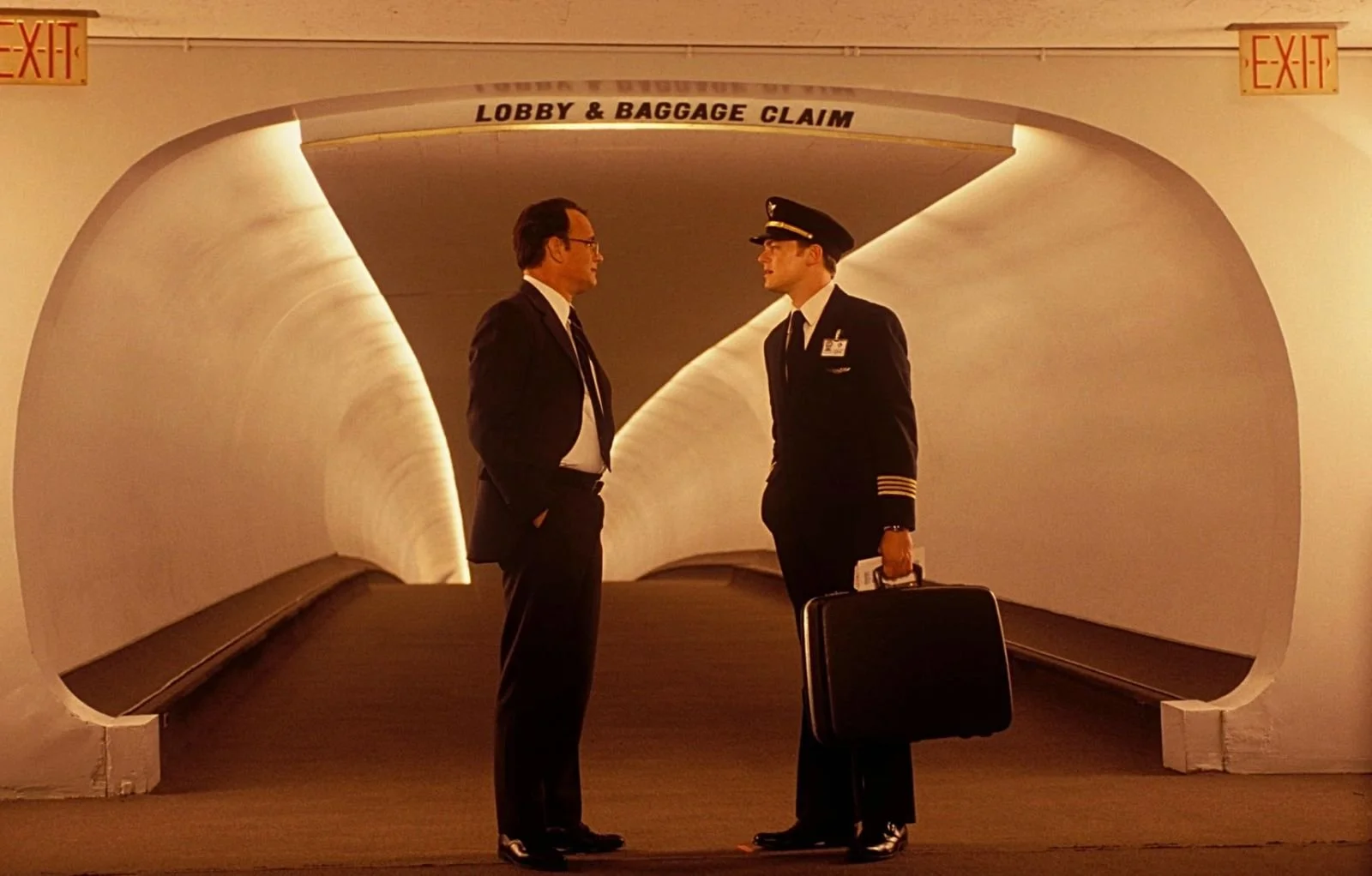
Catch Me If You Can, dir. Steven Spielberg (2002)
I have learned that the airport is not a place for answers. It is a place for holding things tenderly. Memories surface without warning. Thoughts I do not have time for elsewhere suddenly make space for themselves. I do my best not to chase them. I let them pass, like announcements echoing through the terminal, important but not always meant for me.
That in-between state feels familiar to me. It mirrors a way of moving through the world that I recognise. The feeling of being in motion without fully arriving. Of sensing that change is happening, even if I can’t yet name it.
I have also come to realise that I am often drawn to airports as a form of internal escape. Not from any one thing, but from the accumulation of definitions that daily life brings. When expectations begin to stack, or uncertainty becomes harder to ignore, movement starts to feel seductive. Travel becomes a way of stepping sideways out of myself. In transit, I am allowed to loosen my grip on who I am supposed to be. I become lighter, less accountable to the version of myself waiting on the other side.
The airport sits at the centre of this impulse. It marks the first break in continuity, and it allows me to slightly disappear without fully leaving. What it offers is not escape per se, but the conditions for it. It is a space that belongs to transition itself, and that is what I return to.
Perhaps that is why airports recur so often in films. They are places where characters hesitate, where decisions remain unresolved just a moment longer. In The Terminal, the airport becomes a site of suspended existence, where time stretches indefinitely, and identity is reduced to waiting. While my own experiences have never been that extreme, I recognise the impulse behind it. The desire to remain in a space that asks nothing of you, because the world outside asks too much of us.
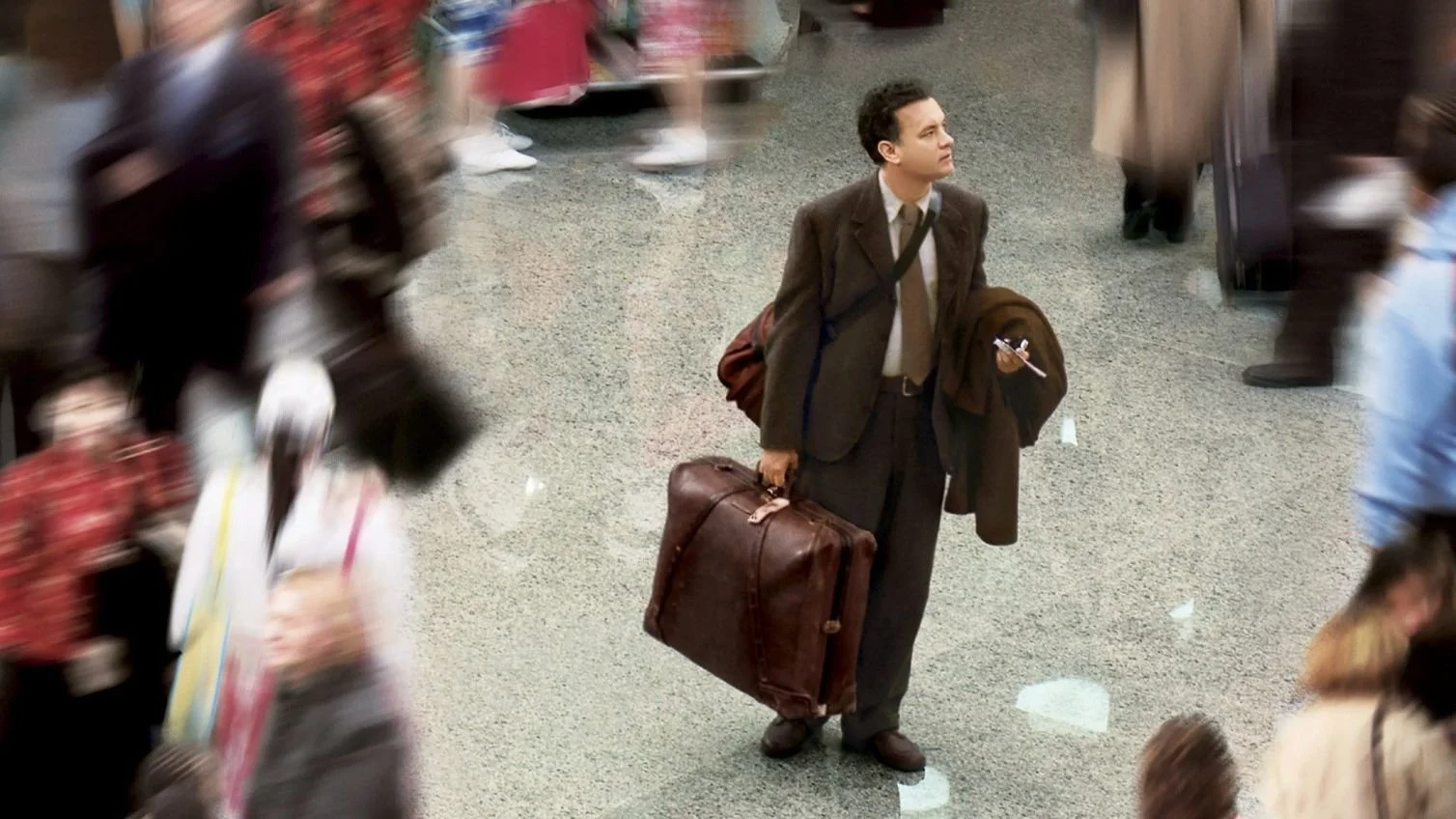
The Terminal dir. Steven Spielberg (2004)
In other films, airports serve as settings for dramatic reunions or final goodbyes. Casablanca comes to mind, with its fog-covered runway and impossible choice. Love is acknowledged but not resolved. The airport allows the story to end without a neat closure. Something is left unfinished, and that feeling of incompleteness is what gives the scene its weight.
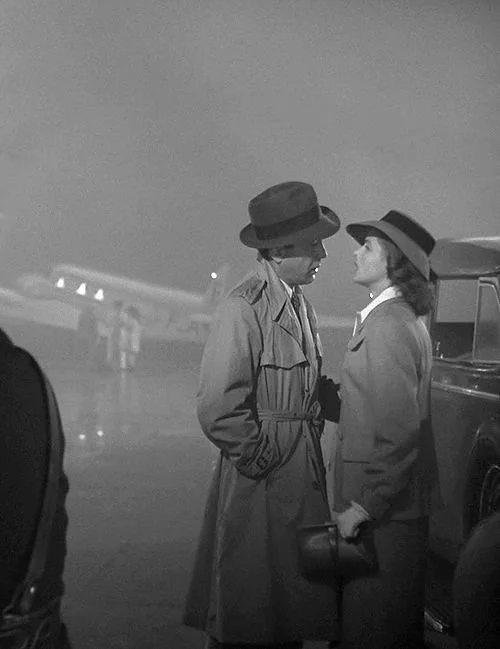
Casablanca dir. Michael Curtiz (1942)
In my own life, airports are quieter than that. There are no grand declarations, no cinematic urgency. Instead, there is reflection. I sit and watch people wait. I look out through the glass and observe planes move slowly across the ground and take off. Everything seems deliberate and unhurried. Time behaves differently here. It stretches just enough to let me notice myself ruminating.
Sometimes, I become aware of versions of myself I do not carry elsewhere. Someone who wanted to leave without fully understanding what that meant. Someone who left knowing more, but still not enough. The airport seems to collect these fragments and return them to me gently, without asking me to make too much sense of them.
There is comfort in the fact that at the airport, everyone is temporarily unplaced. We belong, for a while, more to the act of moving than to any single destination. In that sense, the airport mirrors my own relationship with home. I have lived in different places, but none have ever felt complete enough to summarise me. My sense of home has been shaped less by where I stay and more so by how I move.
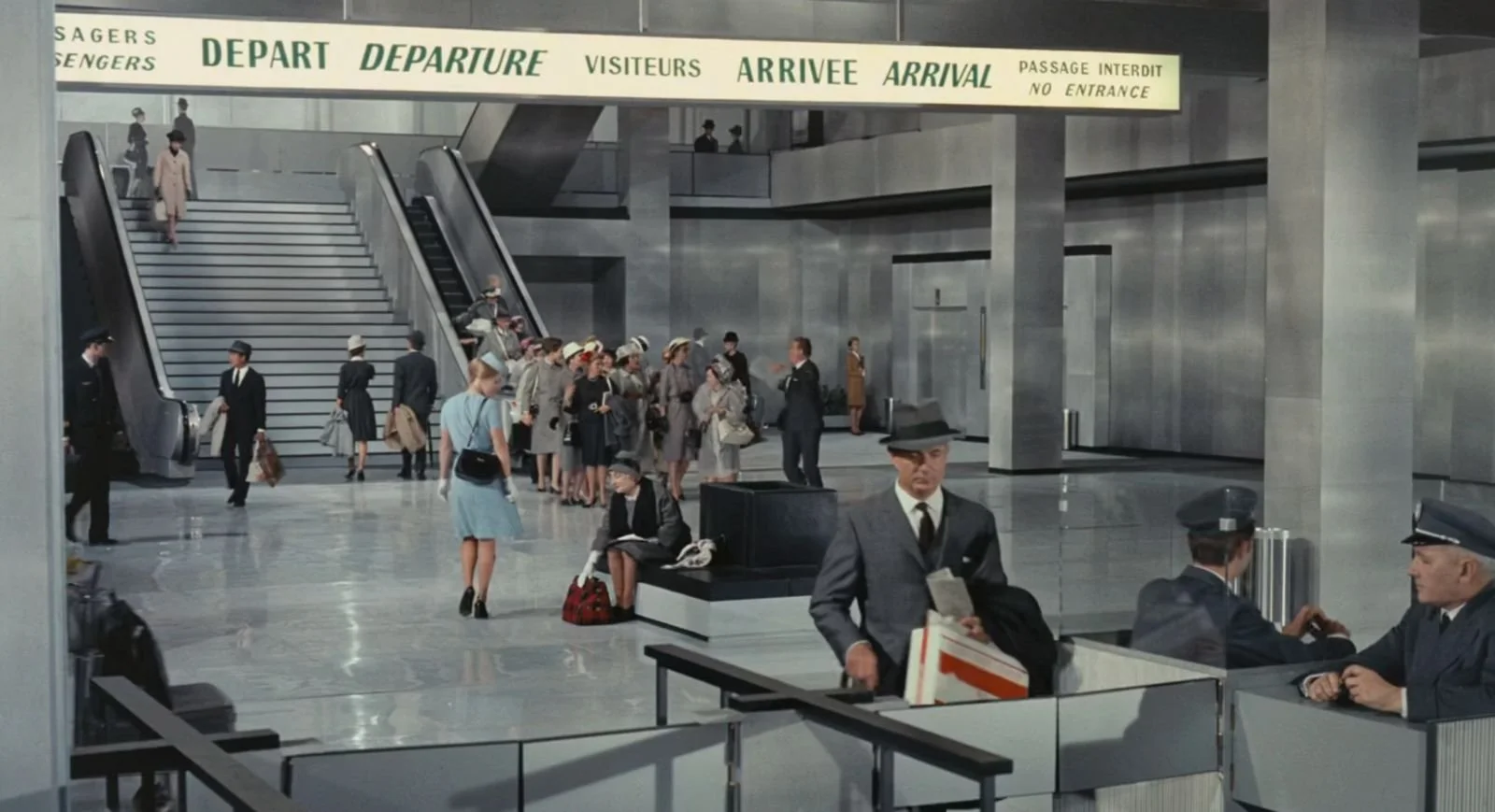
Playtime dir. Jacques Tati (1967)