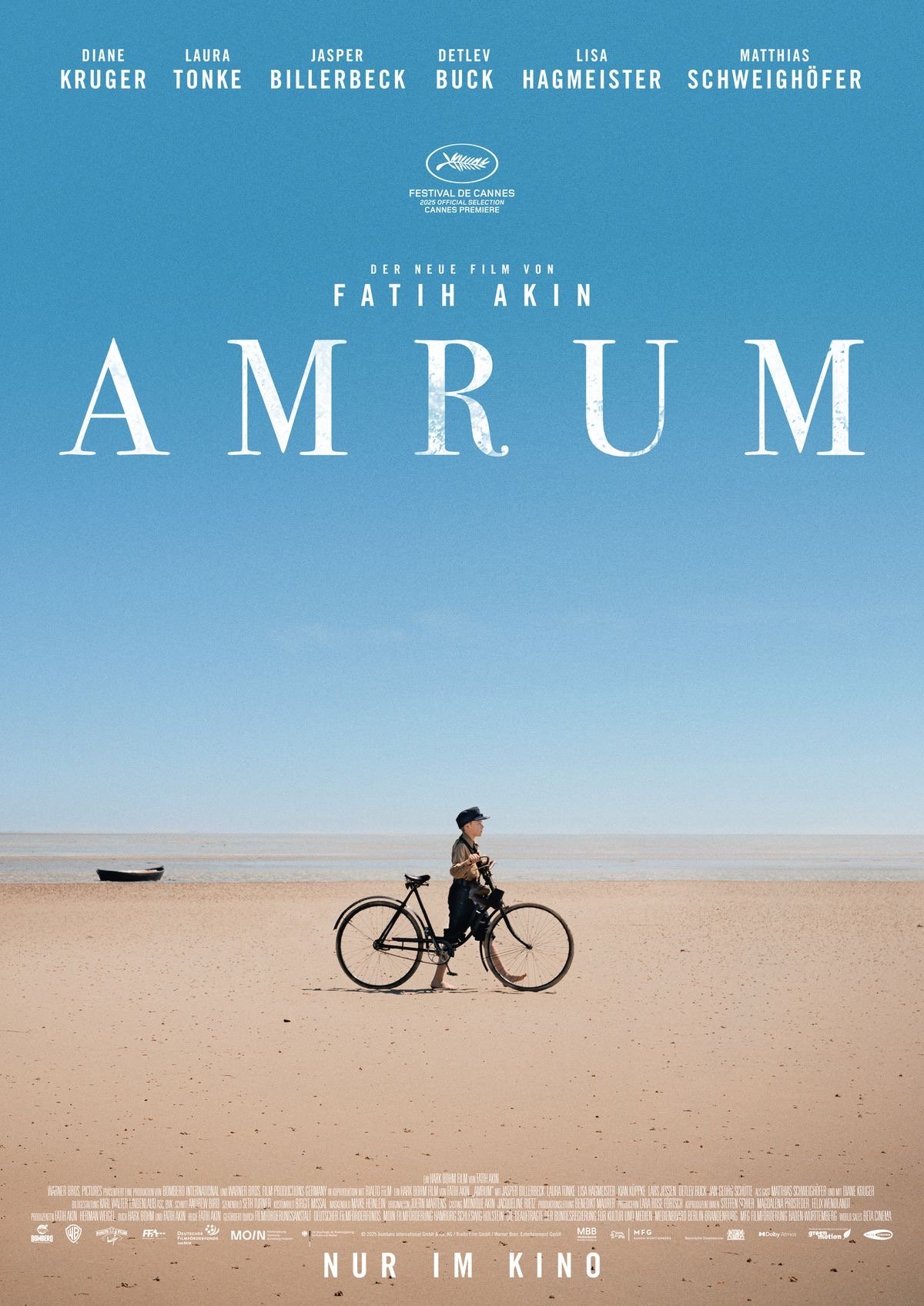
The movie ‘A German Childhood’ tells the story of Nanning, a young boy from Hamburg who lives on Amrum, an island off the coast of Germany in the North Sea. Nanning is the son of a Nazi father, who left his family to go to war, and a Nazi mother. The movie is set in 1945, with Allied planes flying; the autocratic Nazi Germany approaches its collapse. Still, Nanning is a member of the Hitler Youth, and his pregnant mother, Hille, is a fervent defender of the regime. The mother, after hearing the news of Hitler’s suicide, goes into shock and gives birth in her own bed. She subsequently won’t eat anything except white bread with butter and honey– not rabbit meat, not whole-grain bread. Nanning assumes the responsibility of finding this combination of ingredients almost impossible to obtain amid wartime scarcity. His journey becomes a confrontation with his family's history, the realities of war, and the ideology in which he was raised.
Nanning makes a genuine culinary journey through Amrum, which illustrates perfectly the culture of the island and its contrast with a falling regime that did not represent it. He skins rabbits, collects wild geese’s eggs, smokes fish, and even attempts to catch a seal by imitating it. All those efforts were to get people to help him find the ingredients he needed to fulfill his mother's desires. Every ingredient reflects the weight of the war. Honey was scarce because there was no sugar to mix with the water used to feed the bees, as the British had blockaded the North Sea. White flour for making bread was scarce, since it was being used on the front lines to stop soldiers’ bleeding. Butter was unattainable, as it was distributed exclusively by Nanning’s boss, who had fired him earlier in the film after Hille denounced her as a traitor. The film shows how consequences of a collapsing regime impact the ordinary aspects of everyday life, such as accessibility of culinary ingredients.
Being from a Jewish-Czech family who escaped to Brazil after suffering through the horrors of the holocaust, it is impossible for me not to be affected on a personal level by the story. I see the director, Fatih Akin, trying to depict how the fantasy of a pure Aryan Reich is destined to fail, “by the hands of Americans or by the hands of God”.
In Amrum, taste becomes a metaphor the director uses to portray ideological longing. I interpret the food cravings of his mother as deeper desires for purity, plenitude, and stability promised by the Nazi regime. The desire is impossible to fulfill, for the white bread from the bountiful crops, the white butter from the fat Hollandaise cows, and the sweet honey to make it all innocent and pure evoke an idealized image of the regime. The movie also shows how cravings for the same ingredients can mean entirely different things depending on who is craving them.
The impossibility of the fantasy is epitomized at the end of the movie. Nanning finally gathers all the ingredients for his mother's Ambrosia. Yet, the mother initially rejects it. Her reaction proves it was never about tasting the hypothetical bread, but about saving Nazism and restoring something she had lost. The irony of the ending becomes even stronger when Nanning goes to the kitchen only to find his brother eating the sacred-like meal as if it were something ordinary. By the end of the movie, Hille, once a respected member of the community and wife to an important Nazi official, is caught stealing sausages from a local charcuterie. The family returns to Hamburg, Germany— a free country— and the sensation of a persistent bitter taste in the mother’s mouth stays. Even with bread with honey and butter.