1.0 TASTE

EXISTENCE THROUGH THE SENSES: 1.0 TASTE 


Inhale. Exhale

Lie down in a comfortable position. Inhale– relax your legs. Exhale- relax your arms. Inhale- lose consciousness of your muscles. Exhale– melt your body into the ground, and with it, try to become one.

Inhale. Exhale.


Keep your eyes closed. You're in a silent place, with no particular feel to it. You haven't had breakfast, and you lie here naked. When you inhale, you smell, taste; then you exhale to see, hear, and feel

Everything.


For the first chapter of Existence through the Senses, we explore what it tastes like to be alive…


(OVER)SALT

Lilianna Halmai

If my table orders a chocolate mousse, I always swallow my pride to ask the waiter for some salt on the side. I salt each bite so I can savour the rich flavor with a sharp saltiness. I cannot let the mundane go unenhanced. 

We preserve with salt. We preserve what once was. Just as we cover our precious meat with salt to preserve it for the cold winter months, salt preserves my memories. The moments most enhanced start and end with salt. 

The taste in your mouth before a kiss. Under the swaying spring trees your mouth prepares to meet another. For a small moment I remember this saline taste that lines my gums before but not after an encounter of love. 

And after, you ask? Well, this memory ends with the taste of salt beading down my cheek, waiting to be tasted by its creator. But don’t be fooled, this is not a tragedy, as I have felt, and salt is the evidence of a life enhanced.

Nature has a funny way of salting the beauties of life. 

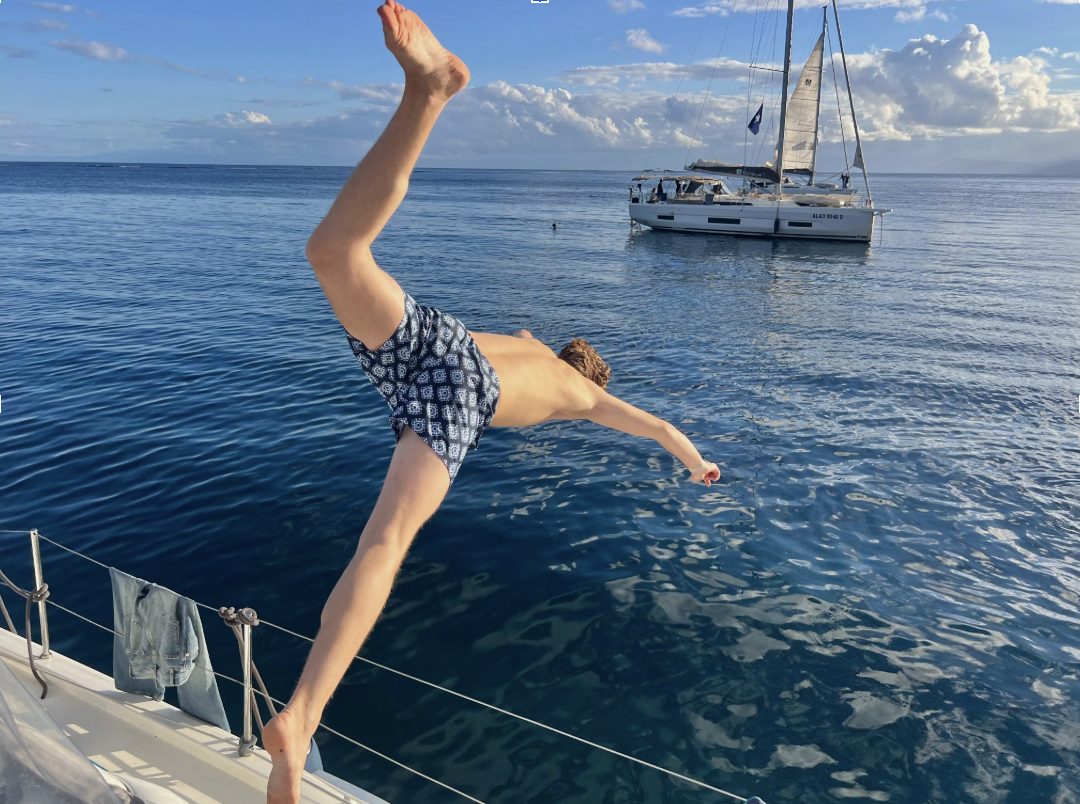
The first jump of the season into the cold blue: a quick sting in the eye, but an enveloping comfort of the great salt that surrounds your body. It wakes you up, it makes you grateful, it reminds you of your existence. I swish the salty water in my mouth, remembering my last summer spent drying the water off my body only to reveal a white trace of salt on my browned skin. I try to lick off the salt trapped in between my eyebrows: I am a child again, tasting to live.

When I sail I taste salt in the wind. I move my head to determine our course with respect to the wind. The wind respects me back by spraying a thin film of its fruit on my face. I smell salt in the air, I feel its coarseness on my skin, but most importantly, I taste the moments spent on a sailboat in the Mediterranean with no worry. I remember the friendship between the sun, the salt, and the wind, showing me the way.

And you cannot forget the salt rocks, the ones we sprinkle on our food. Before I salt my food, I taste the creation in my mind: the enrichment I seek is a future memory, one I allow myself to have. When I overindulge in my dosage of salt, the invisible remains line my lower lip. It is as if my body protects me from this crystal: this device which allows me to remember, enhance, and live. For hours after, I trace my deformed lips, but I cannot revive the taste. 

Just like I oversalt, I overdo. I want to derive the most from each moment, so I salt it until it is too much. I never learn my lesson: I choose to live enhanced, oversalted, whether that is a high or a low. I cannot settle for a bland, saltless life, because with it, I would give up the greatness of my memories. I lose the pride of painlessness, but I win a flavorful life.

Sapore di sale

Sapore di mare

Che hai sulla pelle

Che hai sulle labbra

Un gusto un po' amaro

Di cose perdute

Di cose lasciate

Lontano da noi

Dove il mondo è diverso

Diverso da qui

(Gino Paoli)

I grew up on Hungarian népmesék (stories of the folk) and one story always stood out to me: the Salt Princess: in the story, a king must decide which of his daughters he should gift the greatest land to. As a test he asks each of the daughters how much they love him: the oldest answers that she loves him like pigeons love clean wheat, the middle child answers that she loves him like she loves a cool breeze in the scorching summer, and the youngest says she loves him like people love salt. He immediately exiles the youngest daughter and takes offence. It isn’t until his chef stops using salt that the king realizes the dull life he has without it. We don’t know what we have until it is lost, and in some ways I feel like I don’t feel or taste until I have salted or remembered salt. 

I too felt like the king when I was young: I heard this story of a salt war between two medieval cities. For a long time I could not understand why two territories would fight over a condiment. That was until I understood what salt means. Salt is the vessel which enhances existence. It allows us to taste deeper, sharper, stronger. It allows us to fully feel the territories we occupy: the deep ocean, the sharp rocks, the strong wind. It allows us to remember a life enhanced. If I want to truly live, I too will fight for salt.

When I relive this life, I will remember these salted moments: a shared kiss in the shade, the wind through my tangled hair, or the laughter exchanged over a family dinner table: I will thank salt for the intensity it has granted and for the preservation it provided all these years.


What Our Tongue Remembers 

Minh Khue Bui


I think I don’t like the food at home very much. Or at least, I didn't appreciate it deeply when I lived in Vietnam. The meals were never made to match my taste, but rather to feed the whole family.


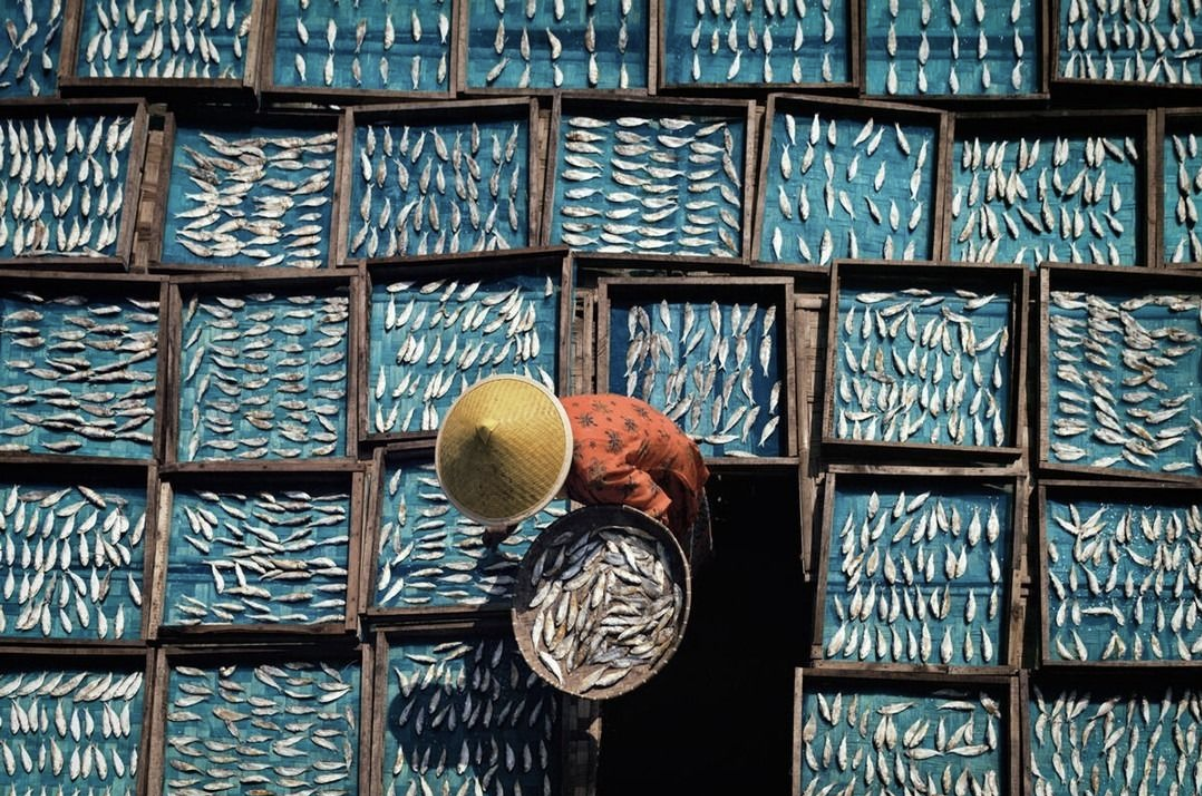
In Vietnam, we have a sauce called “nước mắm”, fish sauce. It is made from cá cơm, a small anchovy, and salt, packed in alternating layers inside wooden barrels or concrete tanks, and left to ferment and age naturally for twelve to twenty-four months. Nothing is added, and nothing is rushed. What comes out is the saltiness of the two natural ingredients, fully merged into one. 

As a child, I hated it. It was too salty, too sharp, not made for a kid’s tongue. Even now that I am fully grown, “nước mắm” has not grown on me. The bitterness folded into the salt still leaves me uneasy.

Still, it was everywhere. It lived in almost every dish my mother cooked, fried, boiled, steamed, or simmered into soup. I could not escape it. Nor could I run away from it. It was the unspoken ingredient of every meal, the one thing that made it all taste like home.

Then, I found myself in Milan, in a foreign kitchen with an empty stomach. I dug through the food I carried from home, across half the earth, and my hand reached for the one thing I once refused. I opened the bottle for the first time. The smell struck me at first, unpleasant, yet strangely familiar. I poured a little over the food. I lifted the first bite slowly, almost as if I was afraid of it. Umami spread across my tongue, and with it, something I still cannot name. It is not salty, certainly not bitter, never sweet, hardly sour, and by no means spicy. It is a feeling.

We rarely notice what food does to us while we are eating it. We notice it years later when one bite pulls us back, in a different city, under a different roof, with different people.

We cannot always go back home. But sometimes, it follows us, into a different city, onto the tongue.

They say we fail to appreciate things until we lose them. I spent my childhood resisting it, and now I carry it across borders, still not liking it, yet unable to leave it behind. Now, in my small kitchen, even with that same sauce I once refused, I try to recreate what my mother and grandmother used to feed me, measuring, tasting, adjusting, then tasting again. The ratio is right and so is the technique, yet the taste is somewhere else. Perhaps it is never about the taste. 

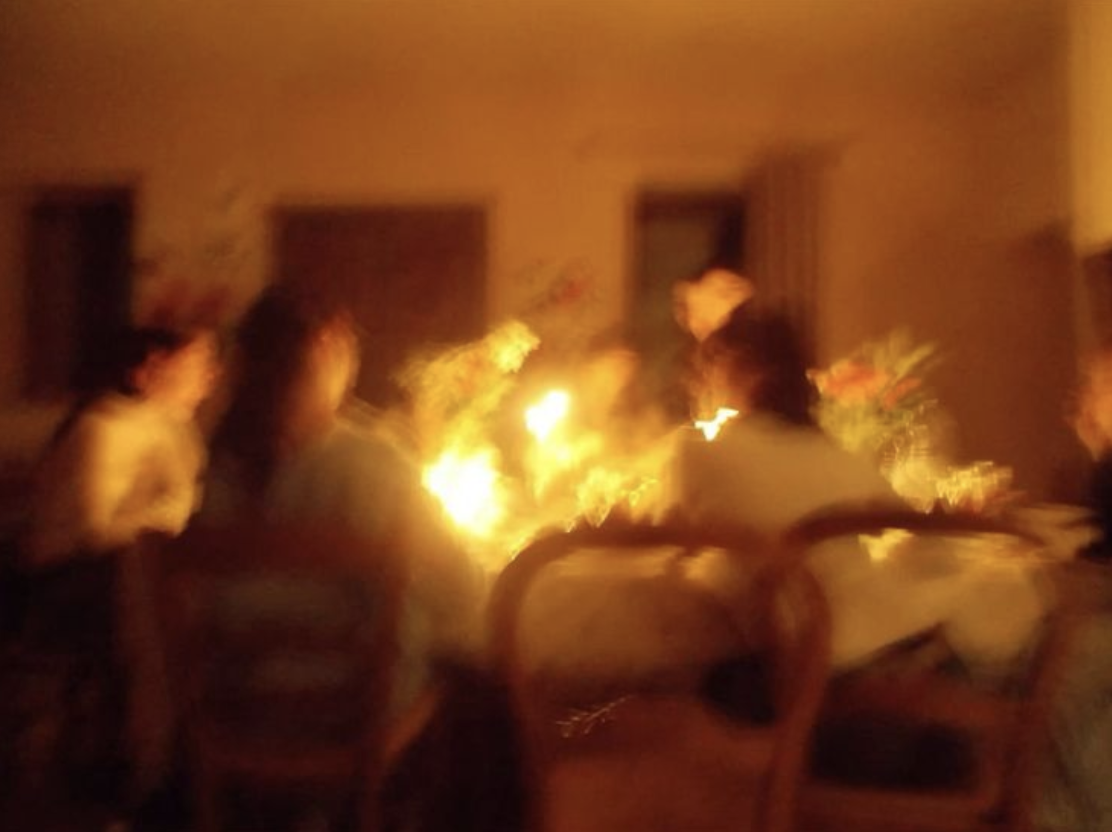
I remember hopping around my grandmother’s feet, climbing onto my tiptoes to ask for just a sip of whatever soup she was stirring. I remember the round table, the whole family circled around it, voices overlapping, nobody in a hurry to leave. That is the ingredient I am missing. That is the ingredient I cannot replicate.

We spend our childhood at the table we were too young to value. We grow up. We can finally leave the walls we were trapped inside, hungry for freedom, hungry to conquer the world. Then one day, in a different kitchen, we stop and look back, only to realize that what we were missing was never on the plate. It was the people around it.