
CINETECA B&A | SIGHT
THREE COLOURS (1993-1994)
Director: Krzysztof Kieślowski
Films: Three Colours: Blue (1993), White (1994), Red (1994)
Produced in: France, Poland, Switzerland
Taking its titles from the French flag, Krzysztof Kieślowski’s Three Colours trilogy refers to the three revolutionary ideals of liberty, equality, and fraternity (Liberté, Égalité, Fraternité) through intimate human experiences. Faces, gestures, colour, and silence become ways of communicating what these ideals mean. As a Polish person, I felt a particular connection to watching the trilogy through its language, the humor, and familiar settings, particularly the Warsaw scenes in White. However, I would recommend these films to anyone drawn to visually rich cinema that reward close attention with sophisticated details. For me, all three movies were a true experience of an authentic human condition. I found it moving, funny, sometimes crushing, and occasionally confusing, but above all comforting in how recognizable the emotions and experiences felt.
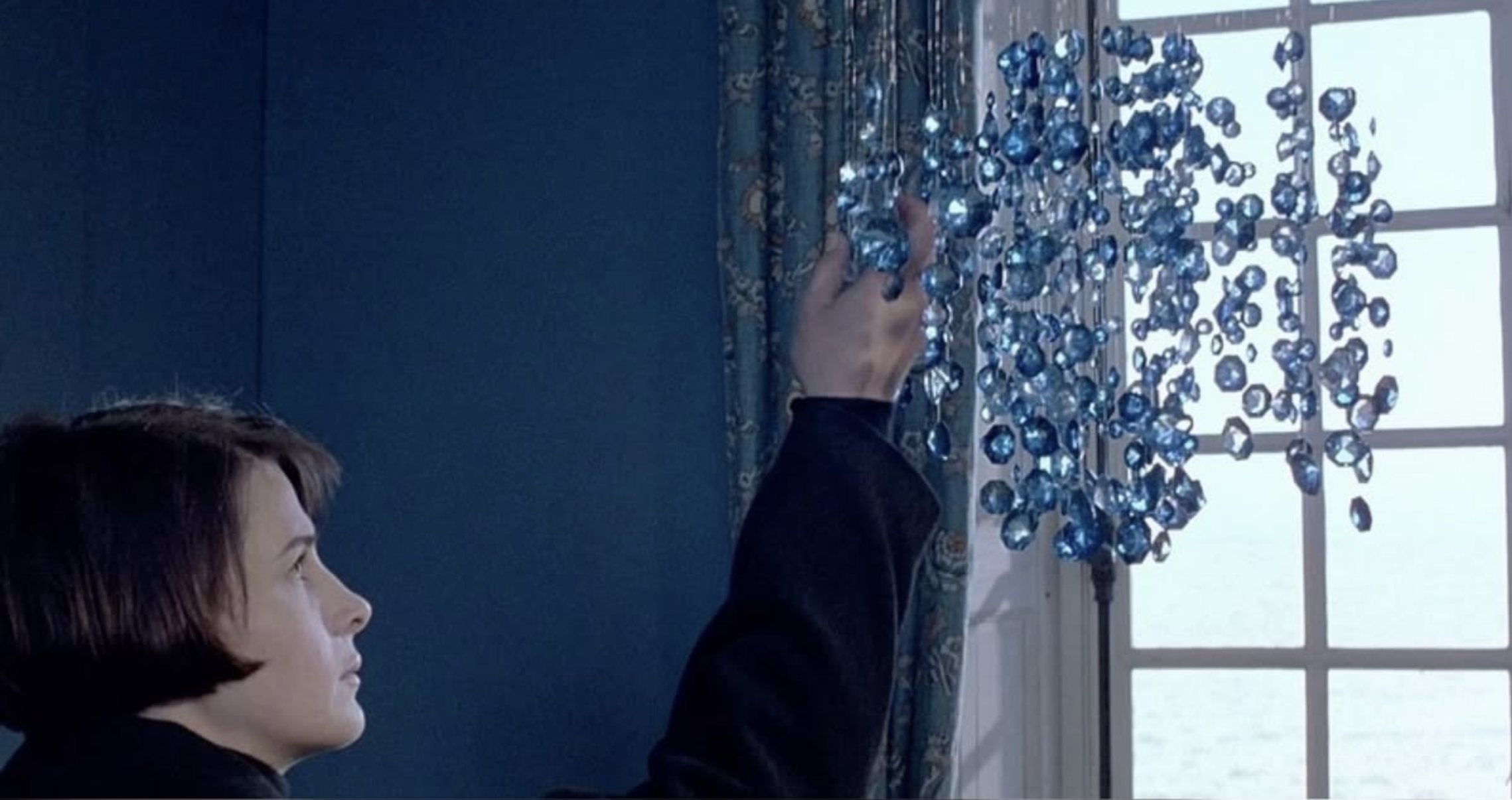
The first movie is Three Colours: Blue (1993), on the theme of liberty. It features Juliette Binoche playing Julie, and it explores her life after she loses her husband and young daughter in a tragic car accident. She then attempts to free herself of everything that connects her to her previous life, struggling to escape the identity of a grieving wife and mother. She distances herself from people, abandons her possessions, and begins living under a different name, hoping to start a separate life. The film follows slow encounters, questioning whether it is ever truly possible to let go of the past. Kieślowski showcases deep sorrow, hurt, and despair, making it mesmerizing to analyze each movement and expression of the main character. Without using words, he allows the viewer to feel an intimate connection with the main character. It suggests liberty may not lie in freeing ourselves from others, but in learning how to live with the connections that shape us.
Music is central in Blue. It serves a narrative purpose rather than being just background accompaniment. The way Kieślowski incorporates it within the slow scenes creates a dramatic narrative force and leads us through the main character’s grief and despair.
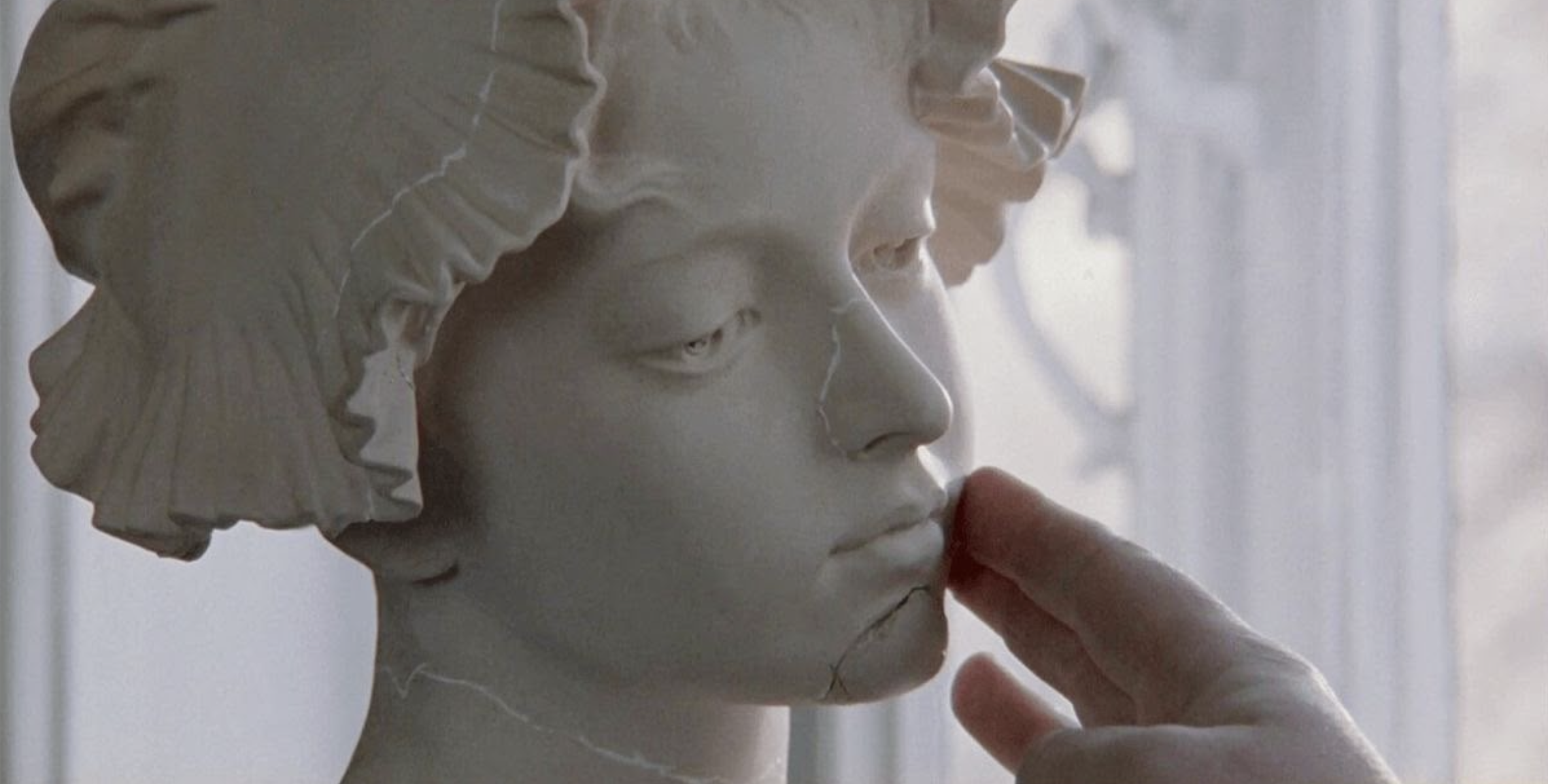
The second movie in the trilogy is Three Colours: White (1994), centered around equality. Starring Zbigniew Zamachowski and Julie Delpy, it explores equality in a satirical way through revenge. Kieślowski uses absurdity and irony to explore the imbalance of power within relationships. The film follows the life of a humiliated Polish man after his divorce from his French wife. He returns to post-communist Poland to build wealth and plot revenge against her. The film leaves us questioning whether equality built upon resentment can ever lead to genuine reconciliation. This one is a psychological comedy-drama, making it a bit different from the other two movies.Although its based on dark humor, I found it equally relevant to showcasing human vulnerability. It contains just as much insight and emotional truth, while simultaneously succeeding in breathtaking visual details. The inclusion of a stolen white sculpture travelling along with the main character was strikingly present and stayed with me.
White can also be read as a satire of post communist Poland, where money and status become ways of reversing humiliation. The characters could be interpreted as representing their respective countries (Poland and France) and representing the shifting social dynamics.
The final movie in the trilogy is Three Colours: Red (1994), exploring fraternity. While the first two movies from the trilogy focus on isolation between people through grief or resentment, the third movie in the series emphasizes connection, by chance.
The film stars Irène Jacob as Valentine, a young model whose life becomes unexpectedly intertwined with that of a retired judge, played by Jean-Louis Trintignant. Despite being at very different stages of their lives, they meet and connect through nonjudgmental, honest conversations. It reminded me a bit of Sofia Coppola's movie Lost in Translation (2003). Both films explore the unexpected intimacy that can emerge between two people who might otherwise have remained strangers. However, Red also examines the theme of moral responsibility growing through human connection and ethical tension within. The movie makes the viewer question how to feel about certain characters and whether we owe something to a stranger. Fraternity, here, emerges through the recognition of another person's humanity and a willingness to understand another person's perspective.
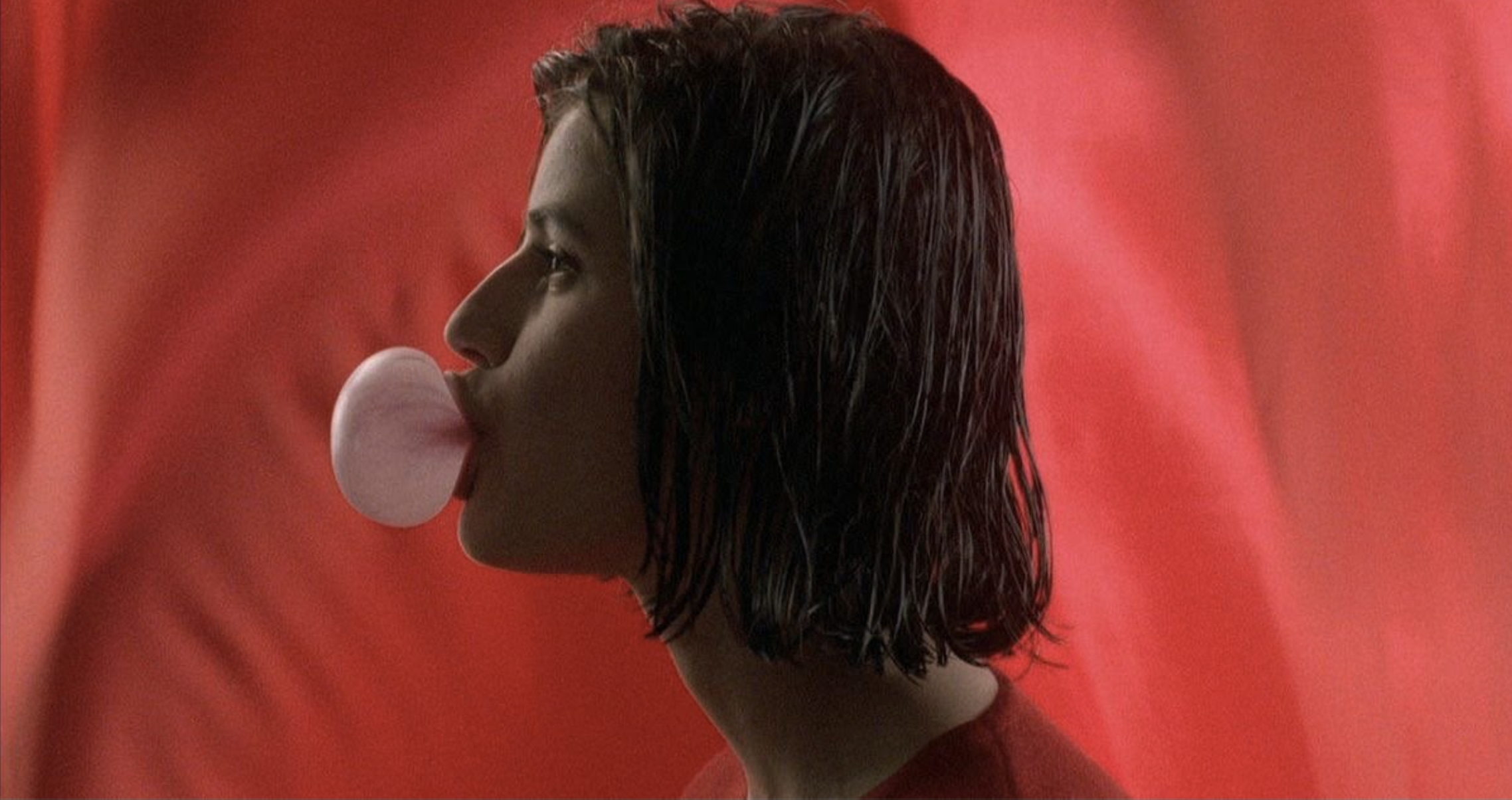
In Kieślowski's Three Colours trilogy, sight becomes something more than the act of watching. The colours blue, white, and red are not merely aesthetic choices. They become visual expressions of the ideals each film explores, shaping how we perceive the characters’ emotional worlds. Yet what makes the trilogy particularly compelling is not only its use of colour, but the way Kieślowski teaches us to observe. The camera lingers on faces, gestures, objects, and seemingly insignificant details, without overdone explicit explanations, leaving room for interpretation. A glance, a silence, or a change in expression can reveal what a character cannot say, but it can also vary depending on the viewer. Across the trilogy, Kieślowski demands our attention to move towards understanding the distance between what people show and what they want to express. This made me think of how much we project our own experiences and feelings onto other people. There is a beauty in observing someone without fully knowing them– in recognizing something familiar but accepting how much remains beyond our own lens of understanding.