The 61-year-old activist and artist Ai Weiwei’s has decided to move away from Berlin this year. It does not come as a surprise. Ai has continuously been on the move throughout his life. As he put it himself in an interview with Deutsche Welle “Wherever I settle — I would not call it home." Ai Weiwei was born in Beijing in 1957, during the regime of Mao Zedong. Just barely a year after his birth, he and his entire family were sent to a work camp in Heilongjiang. Two years later, they were moved again, this time to Xinjiang, where Ai spent most of his childhood. The second chapter of his life took place on American soil, where he studied English at Berkeley in California and subsequently attended Art School in New York. Since then, he has been living in China both voluntarily and against his own will, and most recently he spent three years in Berlin, Germany, for yet again moving on to new ground. He explains this most recent choice is due to language barriers he has had in Berlin.
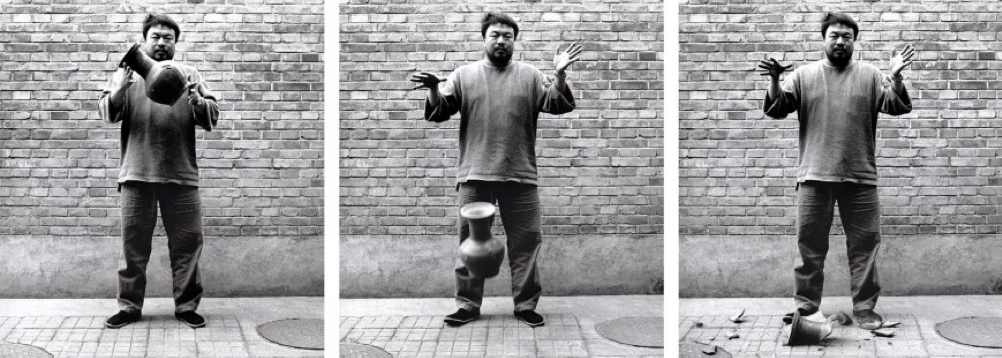
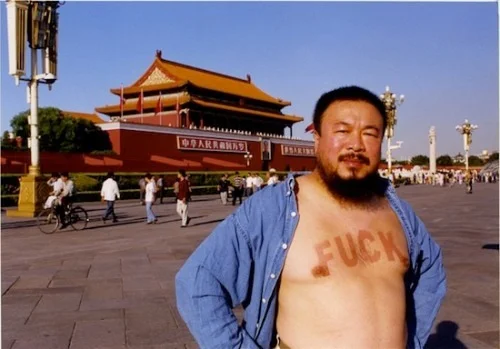
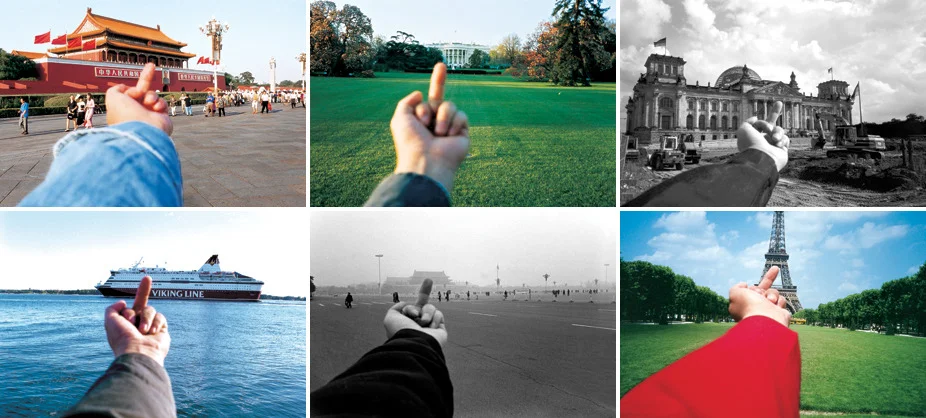
Ai can best be described as a multimedia activist artist. He has been making metal music, crafting sculptures, various installations, documentaries, architectural projects and also literally been “sticking the finger” to various political institutions. One theme that remains constant in all of Ai Weiwei’s work is the explicit “fuck you” attitude for a good cause. This attitude did not come out of blue. His father was the famous Chinese poet Ai Qing, who was prosecuted on the orders of Mao Zedong due to his poetry and free voice. Despite poetry not being Ai Weiwei’s main domain of expression, the use of words has been very present in his artwork.
In the western world, Ai has been praised for his explicitness, and with rising public attention he has become among the most famous artists on the global art scene, which made him praised in China too. He was even given the prominent job of designing Beijing’s Olympic stadium, Bird nest, which was completed in 2008. However, when the Chinese government became subject of the provocations in his artworks, the game changed. His controversies with the Chinese government first got serious when he initiated and promoted an investigation on the approximately five-thousand school children that lost their lives in the Sichuan earthquake in May 2008. The government had kept the seriousness of the situation a secret to the public by strictly censoring all coverage of the catastrophe. Through his blog post and solid online presence, Ai managed to create a whole community of committed young people that went door to door, in the neighbourhoods surrounding the schools that had suffered worst from the earthquake. The community collected simple information about age, name, and date of birth of the children that were killed under the collapses of the poorly constructed public-school buildings. Despite Chinese police's interruptions and setbacks to the investigation, Ai and his team managed to collect the names of 5219 victims of the earthquake. Since then, the Chinese government has followed Ai's move closely, while to Ai’s blessing, his sizeable crowd of followers has kept an eye on the Chinese government. His fame might have been what prevented the Chinese government from prosecuting him and shutting his voice for good. Nevertheless, Ai has been beaten, kept a prisoner and experienced the brutal conducts of the Chinese government first hand.
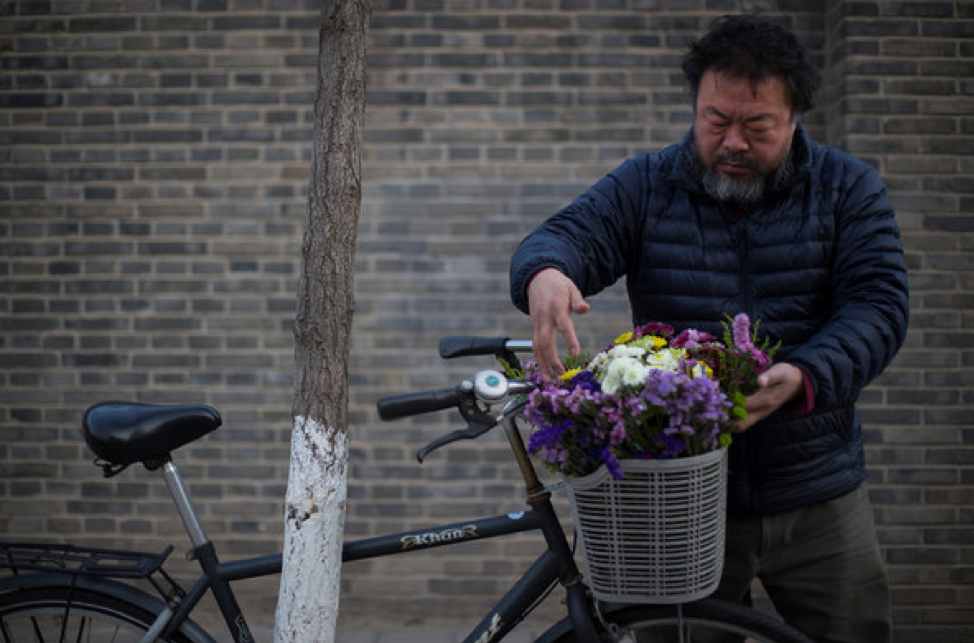
Danish art historian scholar Maria Lange had the privilege of joining Ai’s team for six months in 2013. At this time, Ai still hadn't been granted permission to travel and leave China. Maria explains how Ai would place a bouquet of flowers in the basket of his bicycle every morning. He would park it right in front of the Chinese government surveillance camera outside his art studio. The ambiance and layout of Ai’s studio resemble more a successful out-of-the-box California start-up than one of a typical artist's space. “Cats would walk around freely in the studio” Maria tells us. She continues “Ai would start working around seven o’clock every morning, then later go through various meetings with his team of graphic designers and architects. During the meetings, Ai would nod yes or no to the work his team has presented and give them feedback. Then around noon, Ai would stop for the day himself, while his team continued working till later in the afternoon.” Maria further describes the complications that Ai’s travel constraints added to the working process; “Ai had to follow the team on video-calls when the various installation were set-up abroad, which obviously made the process lengthier. Ai never saw the exhibitions himself in person before the opening to the public”. Since June 2015, Ai regained his passport and allowance to travel from China.
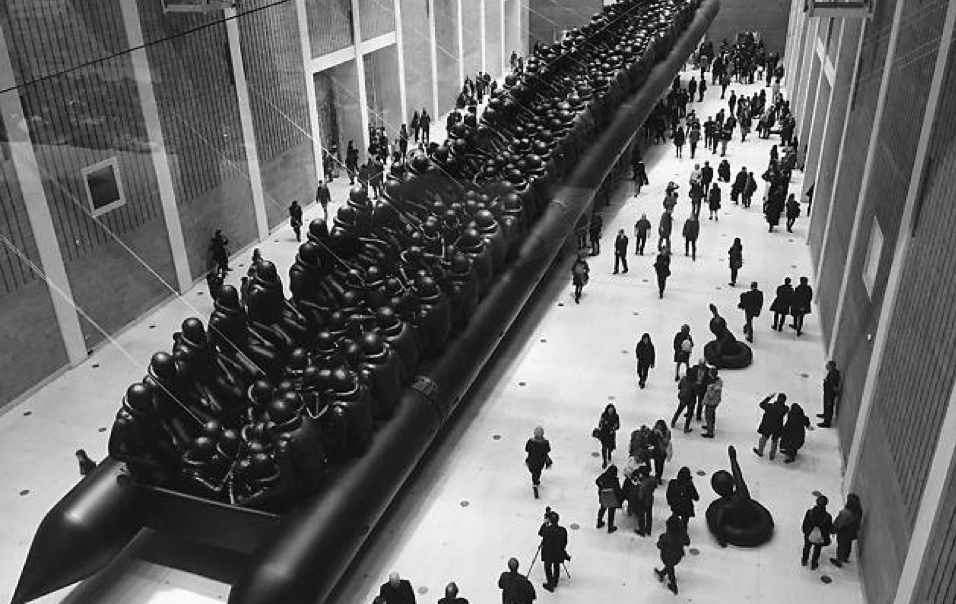
More recently, the refugee crisis has been in the scope of his work. Here is his more recent work, “law of the journey”. This work captures some essential elements of his installation work. It is about activism and the attempt to touch the beholder in order to make change. Moreover, quantity and size remain an important theme throughout much of Ai’s installations, whether it be nine-thousand school backpacks to provoke the Chinese government’s ignorance on school safety, or this 70-meter-long inflatable boat overcrowded with refugees. Size and quantity have become significant tools for Ai to influence the beholder. Explicitness is an important element too. In the documentary “Human flow”, Ai presents the inconvenient truth of the refuge crisis and puts people in confrontation with the harshness of the situation. Also, He closed down his exhibition in Copenhagen Denmark in 2016 in protest against the new law that allowed Danish authorities to seize valuables from asylum seekers. In addition, he jam-packed three-thousand-five-hundred life jackets into the windows of kunst Hal Charlottenborg located in front of the very touristic street Nyhavn and next to the famous square Kongens Nytorv.
Looking at Ai’s catalogue of art projects, it seems clear that he is continuously trying to trigger change for subjects he finds unfair. In a world of information overflow, alternative sources of communication on political action might be quite essential. The world's numerous injustices often seem to be conveniently ignored largely by the public, despite everyone being well- aware of what is going on. The Milton experiment conducted in the 1960s emphasised how when people are separated even slightly from the consequences of their actions, it becomes remarkably easier to follow orders and conduct immoral actions. Although news forecasts deliver the information and show images of war, natural disasters and diseases, they don't manage to touch people. Ai Weiwei masters this exact ability: his work impacts the beholder’s mind. The naked nature of his artworks makes it hard for any fair-minded person to ignore or forget. This is the gun of his explicit "fuck you" attitude. Ai embraces the role available to the modern artist, where his art is a political instrument to expressing his concerns in the world. However, it has not come without a price. Beatings, imprisonment, and the life at stake have been the sacrifices. Timing is not negligible. His father, who produced his poetry works during the time of Mao was prosecuted after all. The story of Ai Weiwei underscores progress, but that freedom of expression is still not a given everywhere in the world.